
It's almost time for the 2026 NCAA volleyball season, and even in the midst of watching Team USA compete at this summer's VNL, I can't help but look ahead to late August. For the past several months, I've spent countless hours analyzing stats, rewatching matches, and comparing strength of schedules in order to put together my list of the 25 best returning middle blockers in the NCAA.
To do this, I established some early criteria. The main one is that players on this list have to have played in at least 60 sets in the 2025 season. This means that promising upcoming players like Nebraska’s Manaia Ogbechie and Indiana’s Ella Boersema are absent from my list, but that doesn’t mean they don’t stand to make a big impact this year; I simply wanted to focus on players for whom there is more data. Beyond sets played, I didn’t have any hard and fast rules, but I prioritized players based on their ability to balance both blocking and attacking excellence, while also looking at how each player performed against top-25 and top-50 competitors compared with their overall stats. Lastly, the average RPI of each player’s opponents played a considerable role in how I ranked them.
I’ll be releasing five players per day up until I get to the top five, at which point I’ll release a new player daily in order to give the best of the best their time to shine.
25. Keirstyn Carlton, Ole Miss
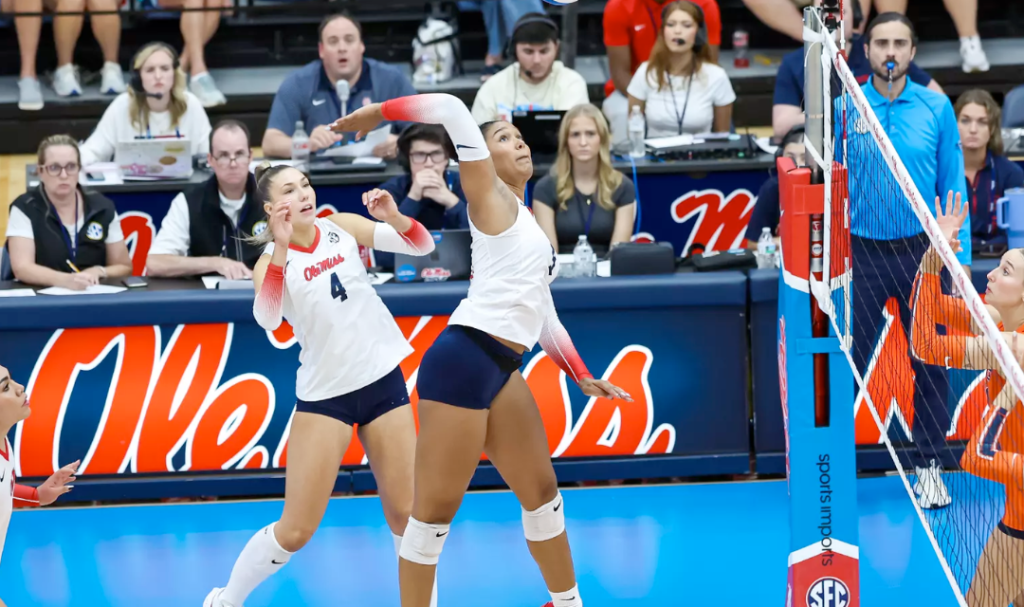
As a freshman playing for a middle-of-the-pack SEC team, Keirstyn Carlton didn’t get a whole lot of attention this past season despite displaying an immense amount of potential that, if built upon, will propel her into the national conversation sooner than later. While I would typically favor a slightly more productive points scorer given the level of competition Ole Miss faced, what stands out about Carlton is how all of her most important stats improve against top-25 RPI competitors. Her points per set jumped to 2.69 against the four top-25 teams she played; that .53 jump is the highest of any player on this list. Her hitting percentage also rises significantly, jumping to .435 thanks to standout performances like her seven kills hitting .778 against eventual national champions Texas A&M. An unfortunate injury prevented her from playing in the last month of the 2025 season, but she should hopefully be back in form this August.
24. Jordan Taylor, Minnesota
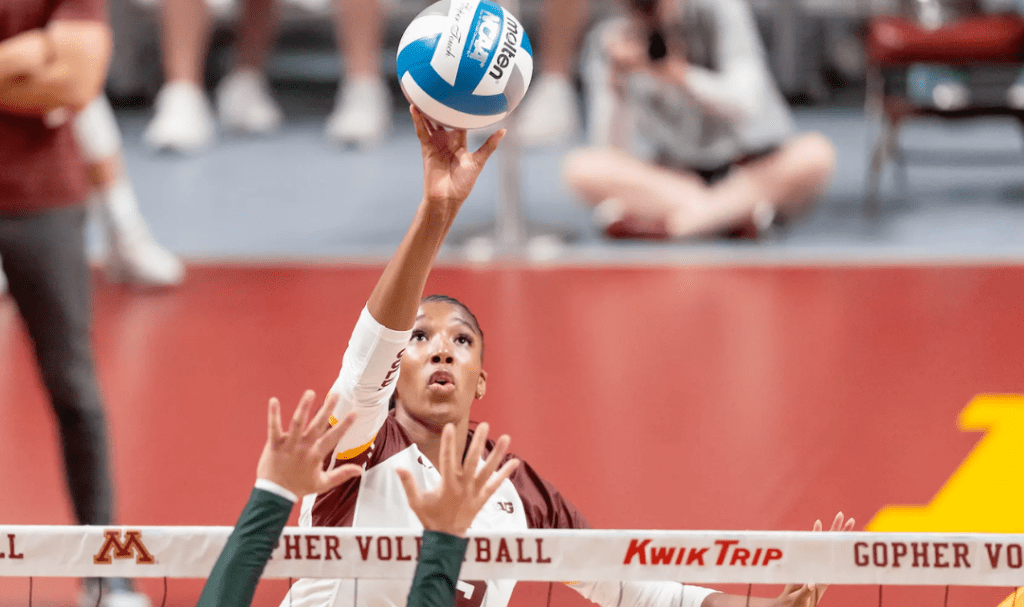
After Calissa Minatee suffered a season-ending injury early in the season, Jordan Taylor went from being a backup to a starter in the blink of an eye. As one would expect of a highly-touted recruit who played for the U19 national team the summer before her freshman season, she quickly rose to the occasion. She ended the season as the Big Ten’s seventh best blocker by blocks per set, putting up similar numbers to experienced seniors such as Rebekah Allick and Serena Nyambio despite only being a freshman. Beyond her blocking, she routinely put together solid offensive performances, including an eight-kill match on a .571 efficiency against Purdue. Based on what we saw from Taylor in only her freshman season, there is a lot to be excited about for the future.
23. Jackie Taylor, North Carolina
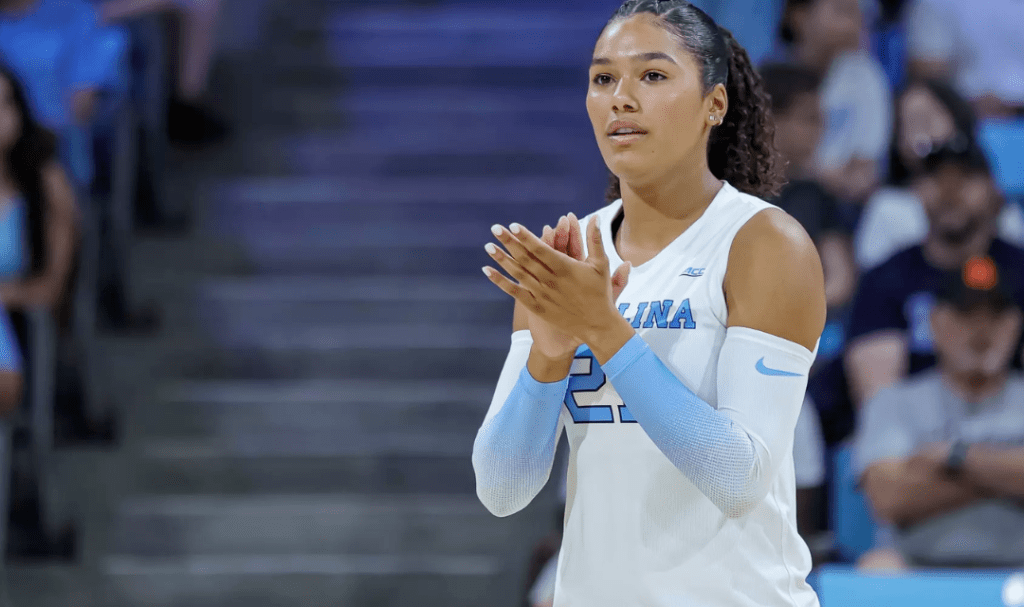
Though hitting under .300 as a middle blocker is definitely not ideal, Jackie Taylor is a player whose blocking skills more than make up for it. She is absolutely suffocating at the net, regularly shutting down some of the country’s top hitters with ease. At the end of the 2025 season, she was in the top five of the ACC for blocks per set when looking at all matches, and actually led the ACC when looking just at conference matches with 1.49 blocks per set. This points to Taylor’s ability to rise to the occasion when playing against top-tier teams; against top-25 RPI teams, her blocking production rose to 1.59 per set. If Taylor can find a new gear in her offense over the coming years, she may well end her college career in the conversation for best NCAA middles.
22. Alec Rothe, Florida
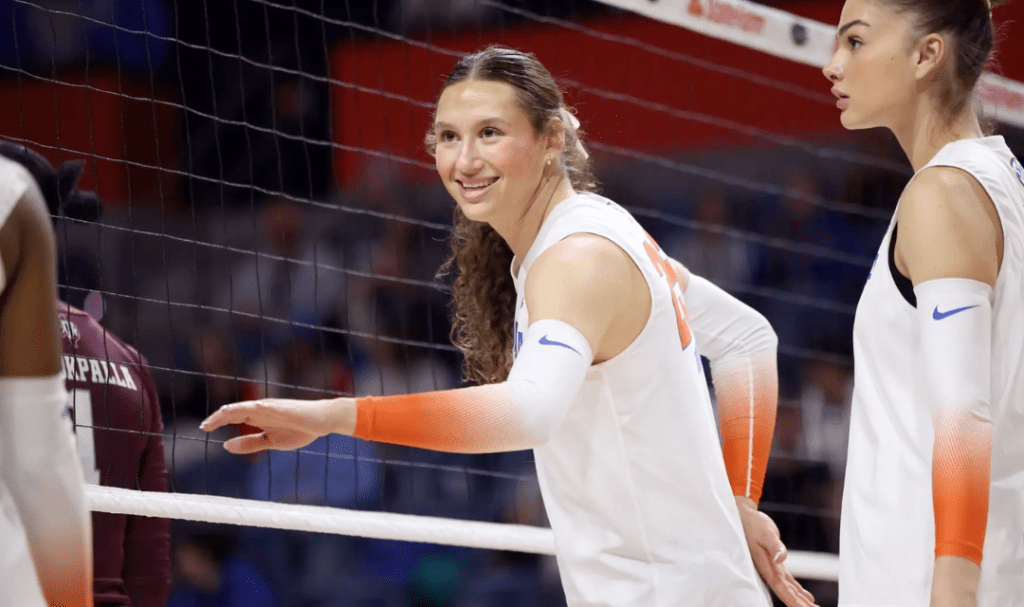
When an up-and-down Florida nearly pulled off an upset of Kentucky, much of that was due to Alec Rothe. In that match, Rothe nearly tied Florida’s leading scorer Jordyn Byrd in points with 18, and hit .357 while her team’s overall average was .120. Even when Florida struggled and lost to teams they really shouldn’t have lost to, Rothe was often a bright spot—she had eight kills (.333) and five blocks when the team was swept by Marquette and 13 kills (.478) and five blocks (two of which were solos) during the team’s four-set loss to South Carolina. With a little more consistency on the pins (of which Florida has approximately one billion to choose from this upcoming season) and in the setting position, Rothe stands to have an even better season in her junior year.
21. Ashlyn Philpot, Illinois
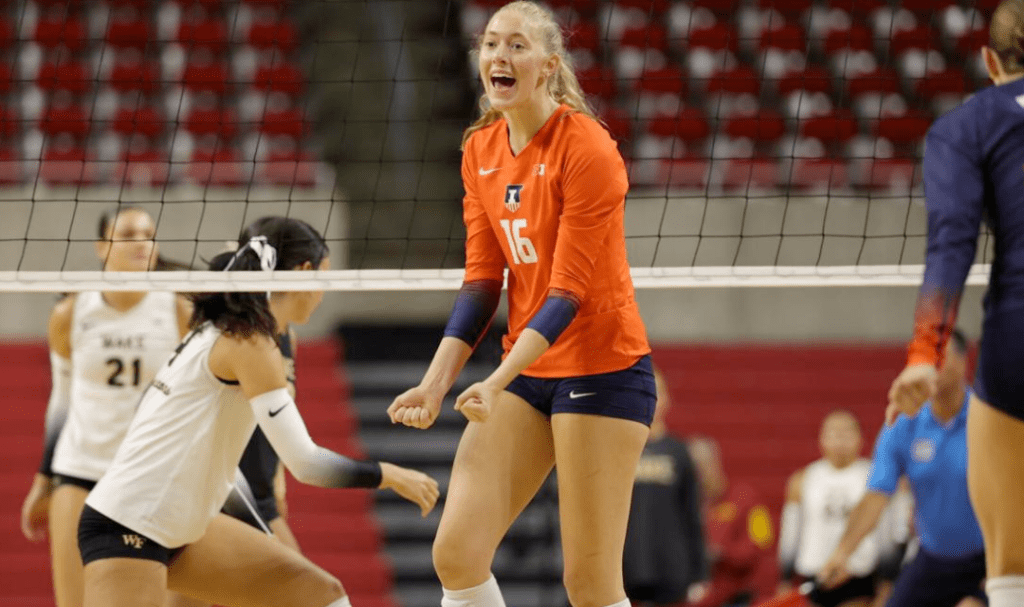
If you’re still wondering how Illinois pulled off an early-season upset of Purdue, look no further than Ashlyn Philpot. While she wasn’t her team’s top scorer in that match, she was certainly its most efficient, putting together 12 kills on a .429 efficiency while also contributing four blocks. And it was her six kills on nine errorless swings in that fourth set that really sealed the deal for the Fighting Illini. Unfortunately, Illinois never quite lived up to any expectations that may have come out of that big win, but Philpot remained a steady force for her team through the rest of the season. She had double-digit kills in eight matches and hit over .400 in all of them, and reached her season-high hitting efficiency of .615 against a strong Wisconsin team. Barring any surprise breakout performances from her teammates, I’m not convinced that Illinois’ upcoming season will be much different than this previous one, but I think it’s safe to expect Philpot to continue performing at a high level.
20. Ayden Ames, Creighton (previously Texas)
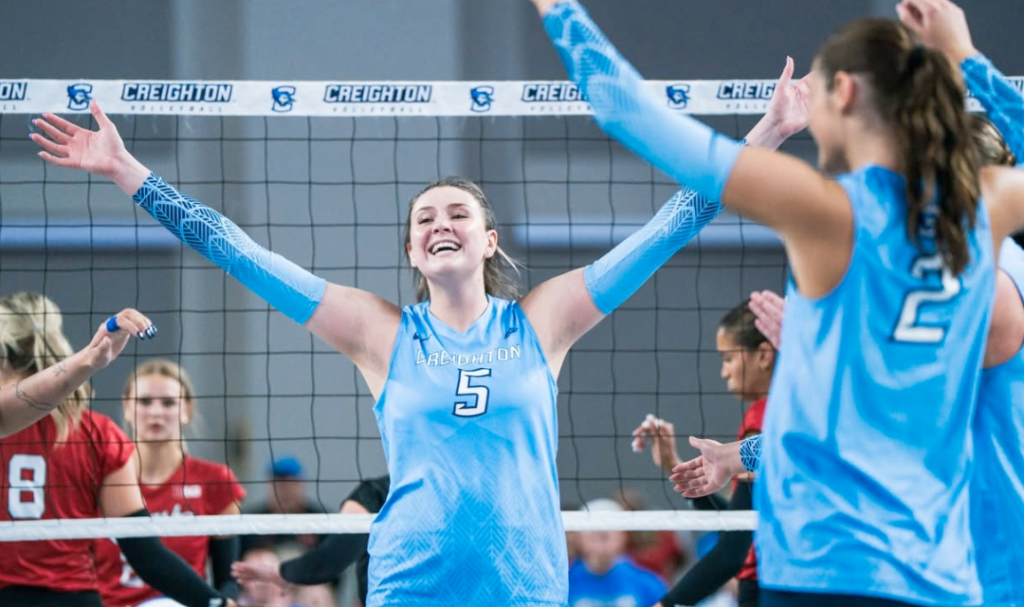
I’ll be honest—I had to do a double take when I saw Ayden Ames’ points per set numbers, because I would have expected them to at least be in the 2.5 range rather than barely above 2.0. Then again, the sets to the middle weren’t always the most…consistent at Texas last season, which I imagine could have affected a few things. Still, Ames always made an impression on me whenever I watched Texas play, partially due to her energy on the court as well as her ability to steer momentum with big-time kills. While her stats from last season don’t necessarily jump off the page, she managed to put up respectable blocking and efficiency numbers considering her slate of opponents was the most competitive of any middle you’ll see on this list. And she has proven that she can do more offensively than what we often saw last year, such as hitting .714 with five kills and six blocks against Kentucky. Given what she was able to do against some of the country’s top teams, I wouldn’t be surprised if she tears up the Big East in the years to come.
19. Kate Mansfield, Auburn
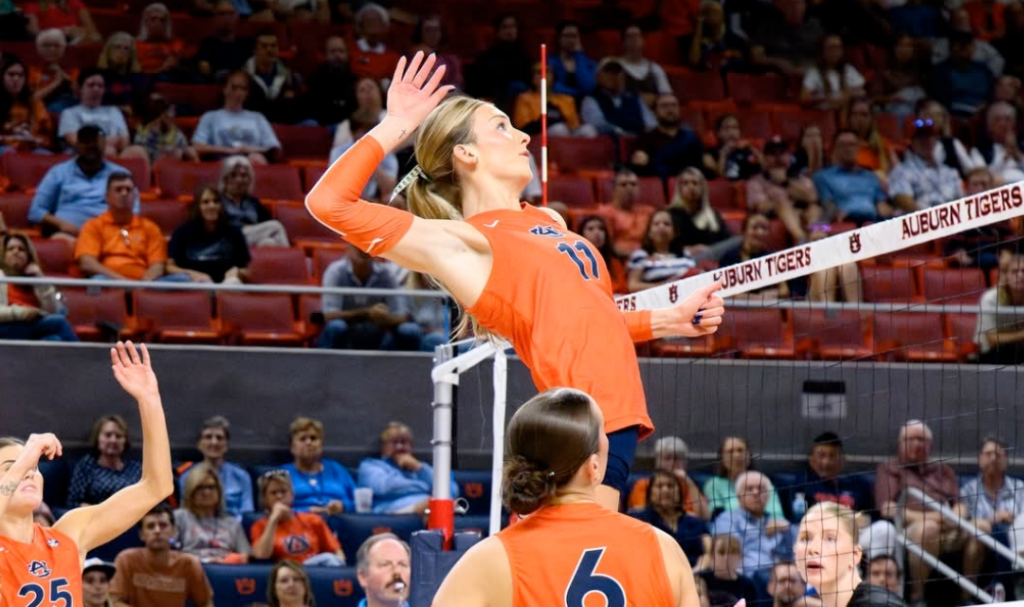
Auburn ended the season as the 17th best blocking team in the country and the second best in the SEC, and Kate Mansfield was a big reason why. With double-digit blocking performances in two matches and an additional 17 matches with five or more blocks, Mansfield established herself as a front row presence that hitters on other teams hate to see coming. Given her disciplined blocking mechanics, it’s not surprising that her blocks per set numbers only took a .11 hit against top-25 competition. While Mansfield’s offensive production isn’t as notable, she made the most of the opportunities she received—against top-50 competition, her hitting percentage jumps to .439. This ability to rise to the occasion is evident in the fact that her best, most complete match came against Kentucky. Against the national runners-up, Mansfield recorded nine kills on a .615 efficiency and an additional nine blocks. Auburn is one of my sleeper teams to make the tournament this upcoming season, and if Mansfield can perform at the same level or reach a new gear in 2026, chances of an at-large bid aren’t half bad.
18. Arissa Smith, Rice
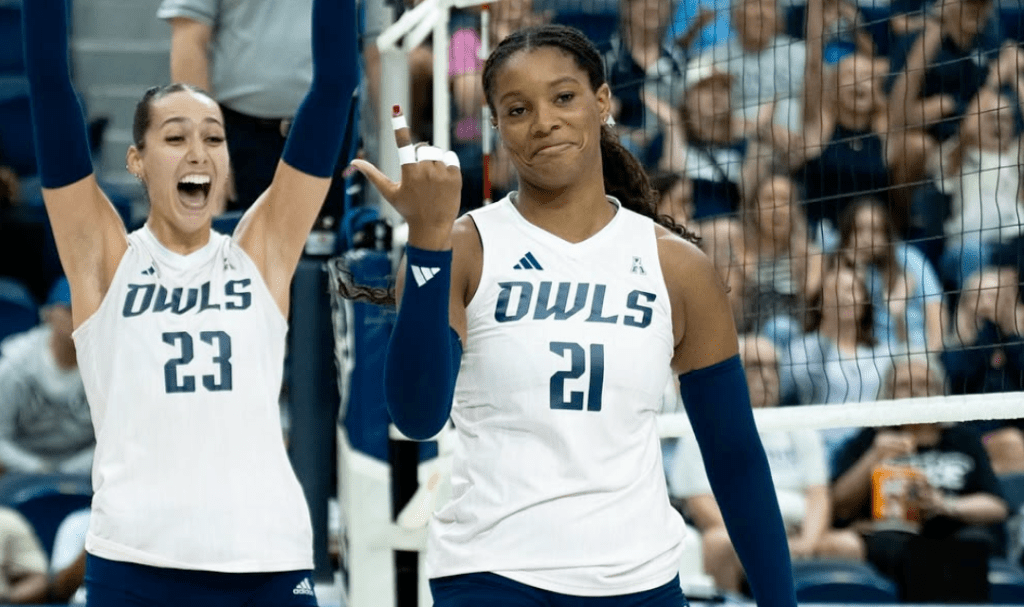
Upon transferring from Mississippi State, Arissa Smith proved her value to her new team immediately. After a 2024 season in which the Owls averaged 1.78 blocks per set, they ended Smith’s first season with the team having improved to 2.35, finishing as the second best blocking team in the conference. For her part, Smith finished as the AAC’s best scorer by blocks per set and was in the top ten for hitting percentage as well. Her best match of the season saw her score 15.5 points against a formidable Tulsa team, which included seven blocks. And while she hadn’t had the chance to score much against Florida in the first-round match of the NCAA tournament, I don’t think it’s a coincidence that it was only after Smith left the match with an injury that the Gators were able to overcome a ten-point deficit in the first set and ultimately sweep.
17. Mia Tvrdy, USC
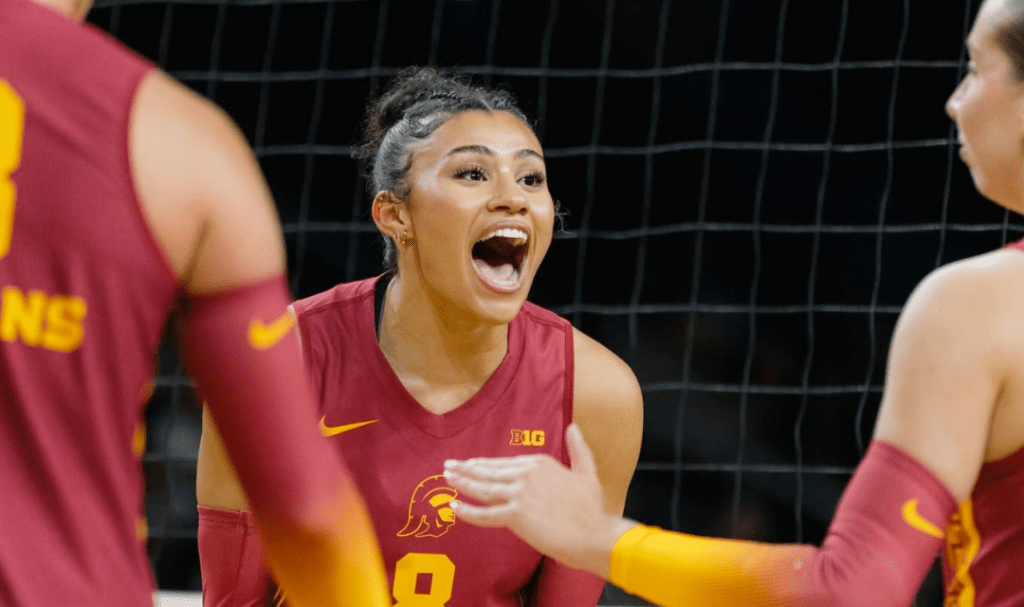
A hitting percentage of under .300 is, again, not the best for a middle, but Mia Tvrdy’s overall impact on USC’s offense is undeniable. Whether in-system or off-the-net, it was clear that Reese Messer trusted Tvrdy to be able to put the ball away for a kill. And, against top-25 RPI competitors, Tvrdy more than rose to the occasion, increasing her points per set to 3.37. For reference, I evaluated 56 middles from which to narrow down this list, and only six of them see an increase in points per set against top-25 competitors.
One of Tvrdy’s biggest strengths is how high she can get off the ground. Even with a limited approach, the height she gets makes her attacks nearly impossible to stop. Her best match this past season was against Indiana; while most of USC’s hitters struggled against the Hoosiers, Tvrdy was one of the team’s few bright spots, leading them in kills with 17 on a .500 efficiency. She notched double-digit kills in an additional four matches and, alongside opposite Abigail Mullen, put up a formidable block that helped USC reach its best season record in 10 years.
16. Izzy Van de Wiele, Western Kentucky
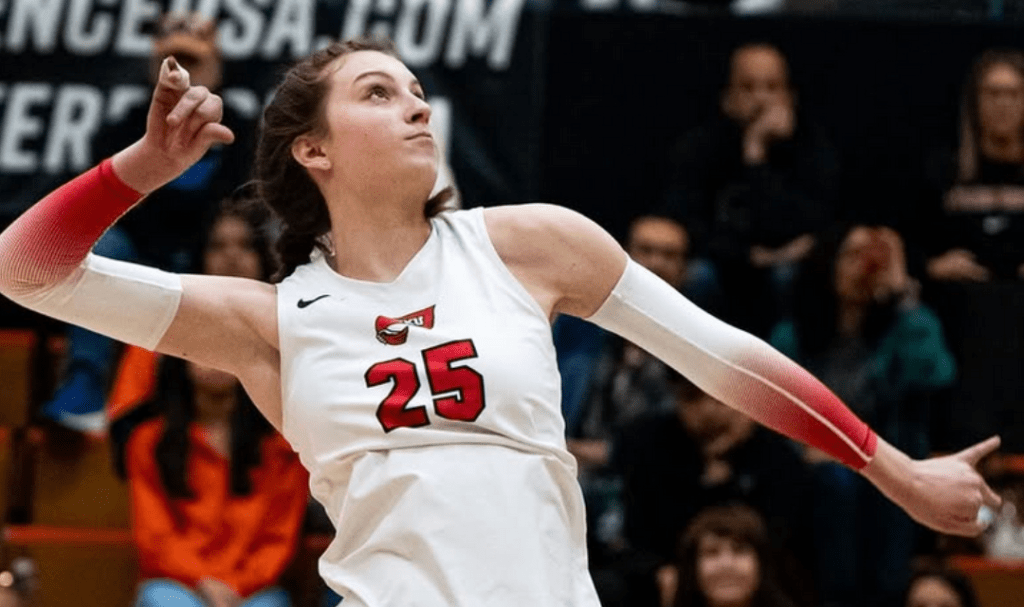
Despite a relatively low level of competition compared with most players on this list, Izzy Van de Wiele’s stats are too good to be overlooked. In her junior year, Van de Wiele was the second-leading blocker in CUSA and was in the top five for hitting percentage, making her one of the most well-rounded middles in mid-major volleyball. And though she only played three matches against top-25 opponents last season (Indiana and twice against UTEP), she averaged a .500 hitting percentage against them. Additionally, during WKU’s first-round meeting with Marquette (RPI 32) in the post-season tournament, she hit .412 with nine kills. So while she may not get a lot of opportunities to play top-level competition, she’s proven that she can rise to the occasion just fine.
15. KJ Burgess, BYU (previously Oklahoma)
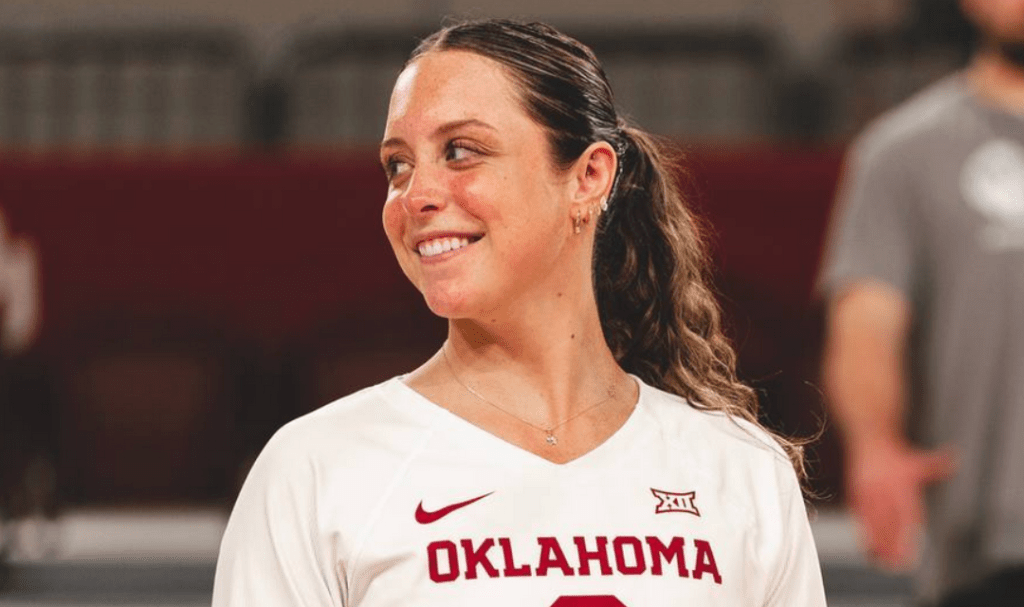
With 1.28 blocks per set, KJ Burgess ended the 2026 as the fourth best blocker in the SEC and the second-best when only looking at conference matches. That last part points to an uncommon strength in Burgess’s game—while most players’ stats, especially related to blocking, take a hit when playing against top teams, Burgess’s don’t. Of all the blockers on this list, she sees the largest increase in blocks per set against top-25 competitors vs. overall competitors, with a 0.35 jump to 1.63 blocks per set against the four top-25 teams Oklahoma faced last season. Not too shabby.
Her blocking isn’t the only thing that makes her valuable, of course. She is extremely efficient in front of the setter, routinely putting up hitting percentages in the .400s or above and becoming Oklahoma’s career leader for hitting percentage. She put together six double-digit kills performances this past season, with her best match coming against Mississippi State, against whom she recorded 12 kills on an eye-watering .706 hit percentage—and she did that across just three sets. Now that she’s returned back to her home state of Utah, BYU is going to have one of the deadliest middle duos in the country with Burgess and Brielle Kemavor at the net.
14. Chelsea Sutton, Tennessee
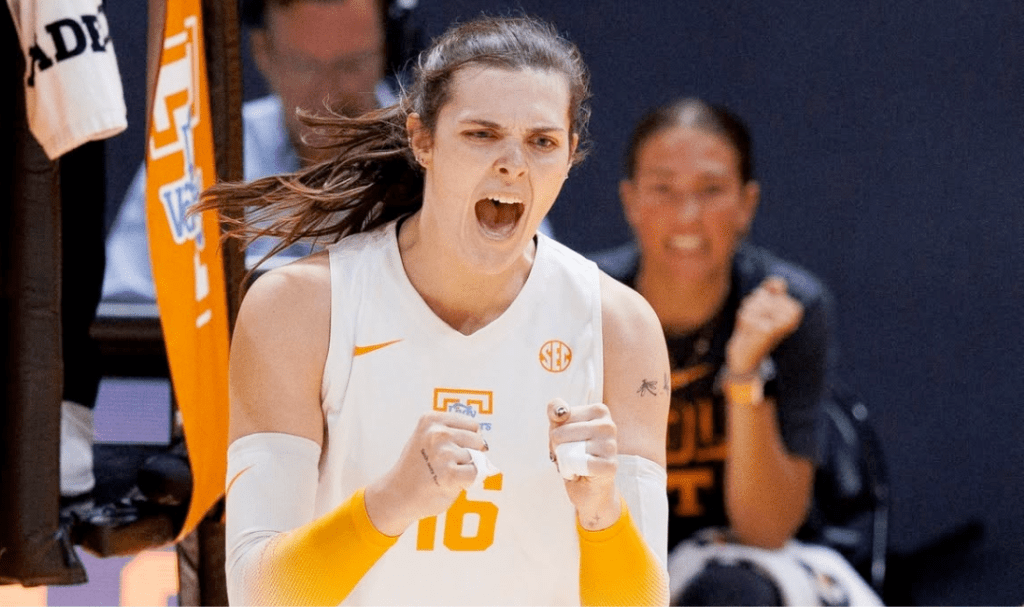
At the end of the 2025 season, Tennessee saw a mass exodus from the program—one that, at least publicly, remains unexplained. But of the few players who did stay in Knoxville, Lady Vols fans should be glad one of them was Chelsea Sutton. Along with setter Caroline Kerr (who has also remained loyal to the orange and white), Sutton was always the player who most caught my eye whenever I watched Tennessee this past season. She brings a ferocious energy to the front row that manifests both in points and in boosting her team’s energy.
Always reliable on the slide, Sutton notched double-digit kills in six matches last season, with her season-high 15 kills on a .609 efficiency coming against Georgia Tech. And while she doesn’t necessarily put up massive blocking numbers on any given night, Sutton reliably gets her hands in front of a lot of opposing attacks, and can almost always be counted on to score at least four or five blocks. Given the growth that Sutton saw between her freshman and sophomore seasons, we may well see her reach an even higher level of play in her upcoming third year with the Vols.
13. Ella Piskorz, Pepperdine
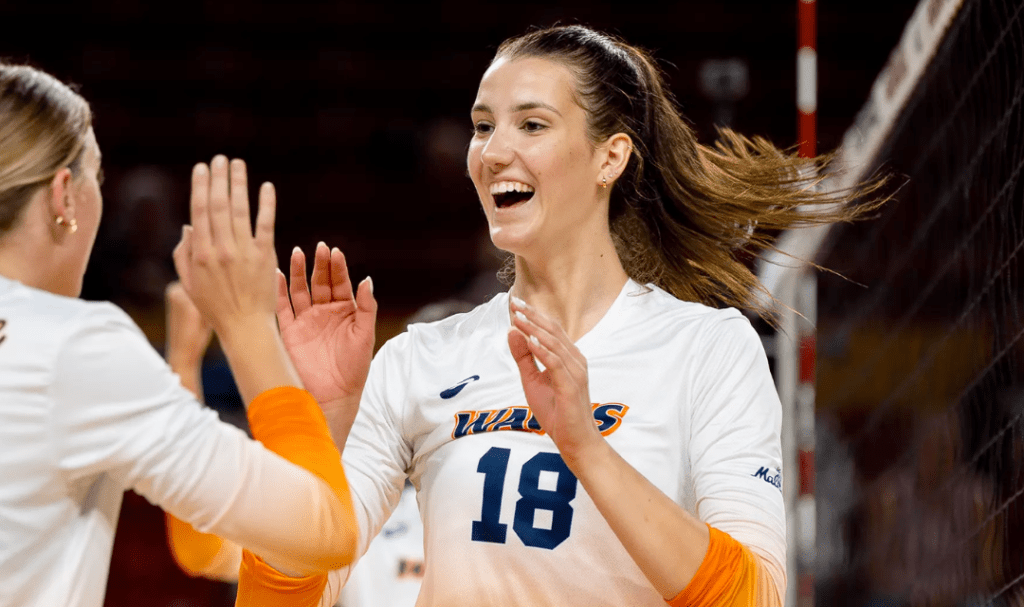
Remember when UCLA lost to Pepperdine early on in the 2025 season, confusing everyone who had high hopes for the Bruins after their off-season pickups? You can (partially) thank Ella Piskorz’s 12.5 points for that upset. The rising junior put together one hell of a sophomore campaign, totaling ten matches with double-digit kills and recording five or more blocks in 17 matches. Most notably, she accumulated six solo blocks in a match against Santa Clara, and ultimately ended the season as the West Coast Conference’s top blocker. While Piskorz’s offensive efficiency doesn’t quite hold up against top-25 opponents (based on a sample size of three), her blocking mostly does—in her matches against Pitt, UTEP, and Arizona State, her blocks per set only fell to 1.22. With her college career only half-over, it’s likely we’ll see her grow even more this upcoming season.
12. Brielle Kemavor, BYU
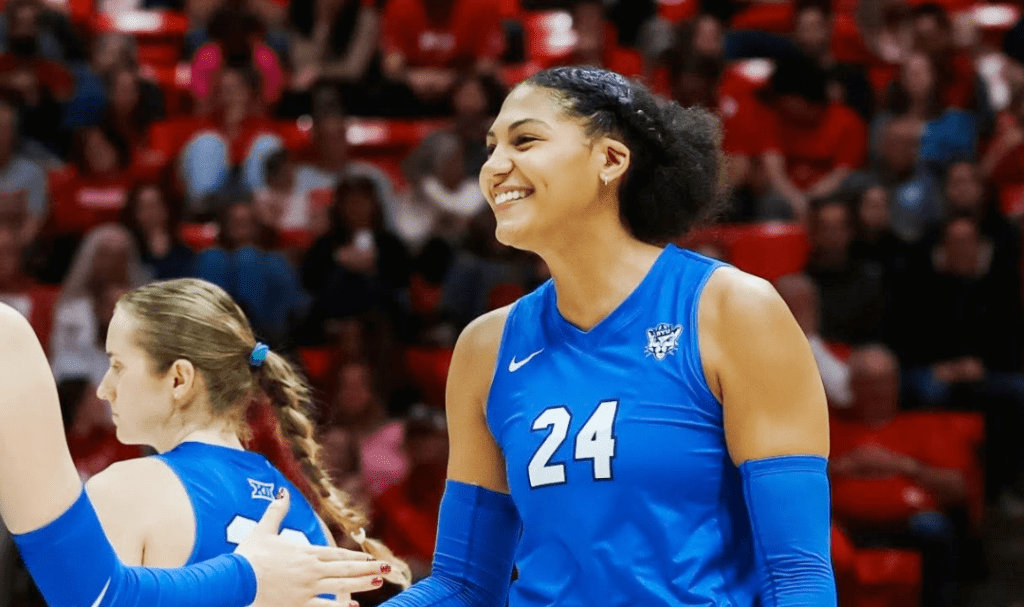
Most NCAA middle blockers’ blocking numbers are inflated due to any block with even a modicum of help from another player being tallied as a block assist, resulting in blockers getting credit for their pin hitters’ blocks and vice versa. But in Brielle Kemavor’s case, I’d be willing to bet that a higher-than-average percentage of the block “assists” she’s credited for are a result of her limbs stopping the ball. She is an extraordinarily disciplined blocker, consistently getting her hands up for block touches that slow the ball down or, of course, absolutely roofing the opposing hitter.
Impressively, all of Kemavor’s key stats see improvement when facing top-25 competitors: her scoring increased to 3.29 points per set, partially on the back of a .18 jump in blocks per set, and her hitting percentage improved to .392. This is thanks to standout performances against top-half Big 12 competitors, including two 12-point performances against conference champs Arizona State as well as a 22-point match against Baylor.
11. Lucie Blažková, Minnesota (previously Washington State)
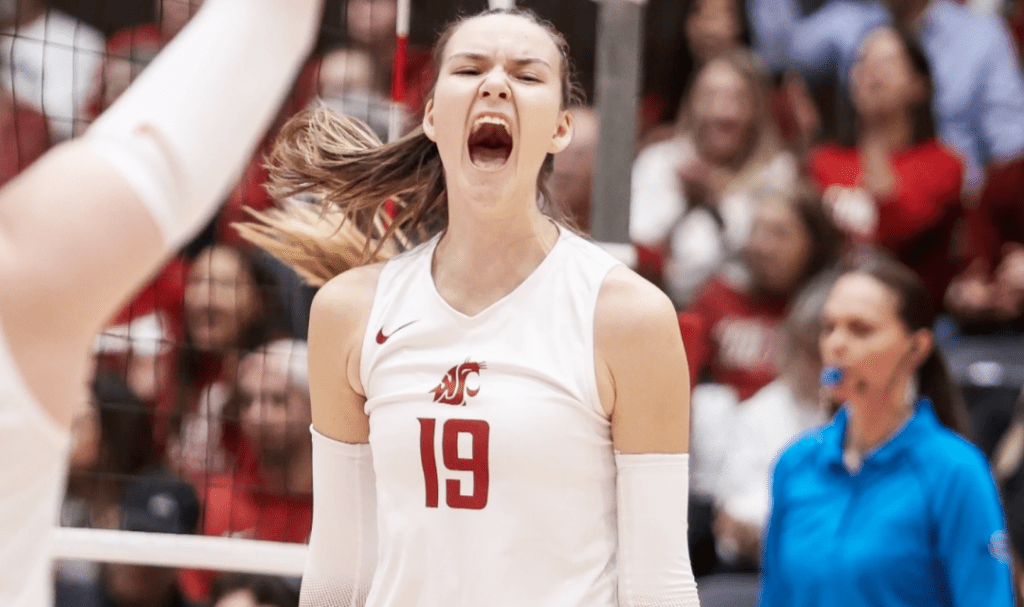
Despite having faced a lower level of competition than any other athletes on this list, Lucie Blažková’s numbers are simply too good to rank any lower. It’s rare for a middle blocker to lead a team in points, but when you can attack, block, and serve as well as Blažková can, that’s what happens. The Czech middle recorded double-digit kills in 12 of 28 matches last season, including two 19-kill performances. While WSU didn’t play against any top-25 teams last season, Blažková still put up a .408 hitting percentage and 1.1 blocks per set against the six top-50 RPI competitors she faced. The level of competition she’ll see in the Big Ten is certainly going to be much higher than what she saw in the WCC, but I think we’ll still see Blažková make a big impact on the Gophers’ upcoming season.
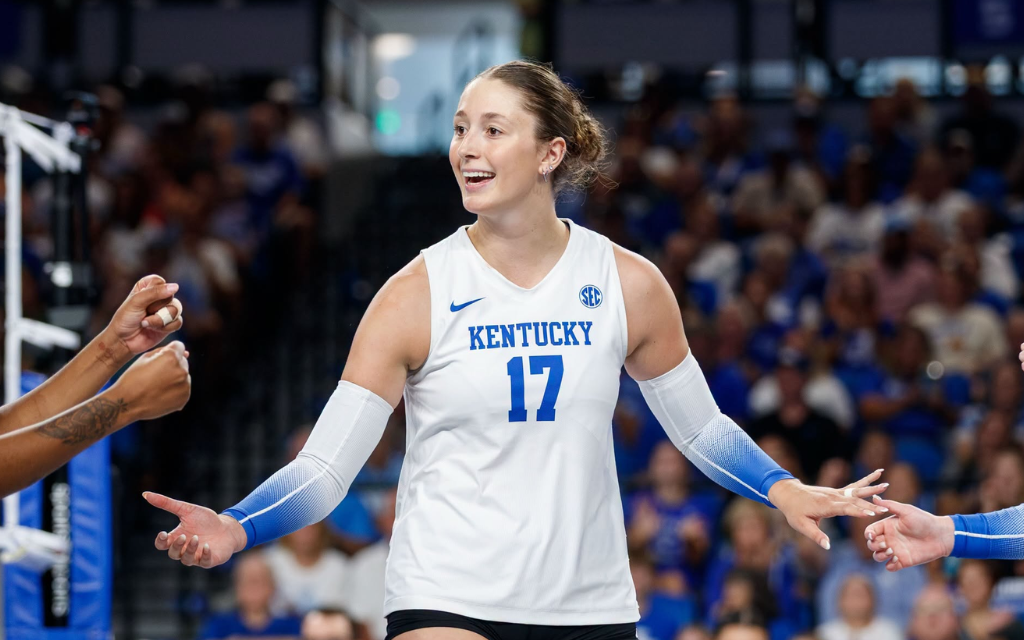
10. Lizzie Carr, Kentucky
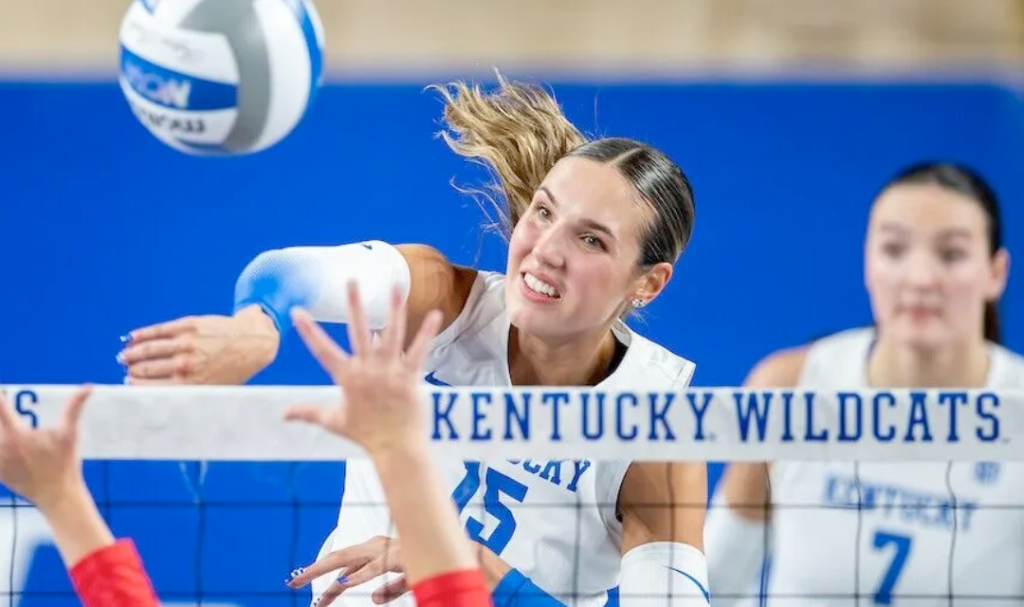
Lizzie Carr doesn’t always hit the hardest ball, but it’s her wingspan, height, and court vision that make her so effective. When attacking, she routinely aims for the perimeter of the court, and while this sometimes results in untimely errors, it more often-than-not means a point for her team thanks to being virtually undefendable. This is one such reason why she had double-digit kills in seven matches last season, including 13 kills on a .414 hitting efficiency in the SEC Championship match against Texas. Carr has also proven to be a capable blocker, notching 10 blocks in four sets against Missouri and putting together an additional 12 matches with five or more blocks.
9. Erika Sayer, Stanford
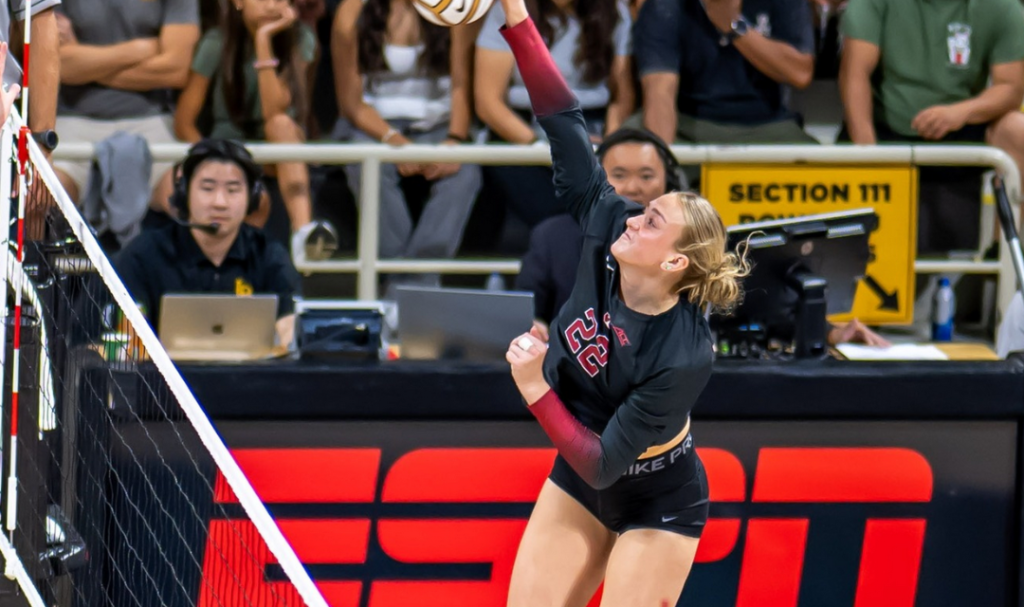
What a fantastic revelation Erika Sayer was in her freshman campaign. She immediately stood out in her first NCAA match when she notched five blocks (two of which were solos) in Stanford’s victory over Florida, and not long after that her offensive power emerged. Her 12 kills on a .474 hitting efficiency helped Stanford nearly clinch victory over Texas, and she immediately followed that up with a 20-point performance against Missouri. She ended the season with double-digit kills in nine matches and six or more blocks in 10. She’s also one of several players on this list whose blocks per set numbers are barely affected by the level of competition she faced—her blocks per set dipped only by .06 against top-25 opponents and .02 against top-50 opponents. This kind of performance just in her freshman year spells great things to come for Sayer and Stanford.
8. Leah Ford, USC
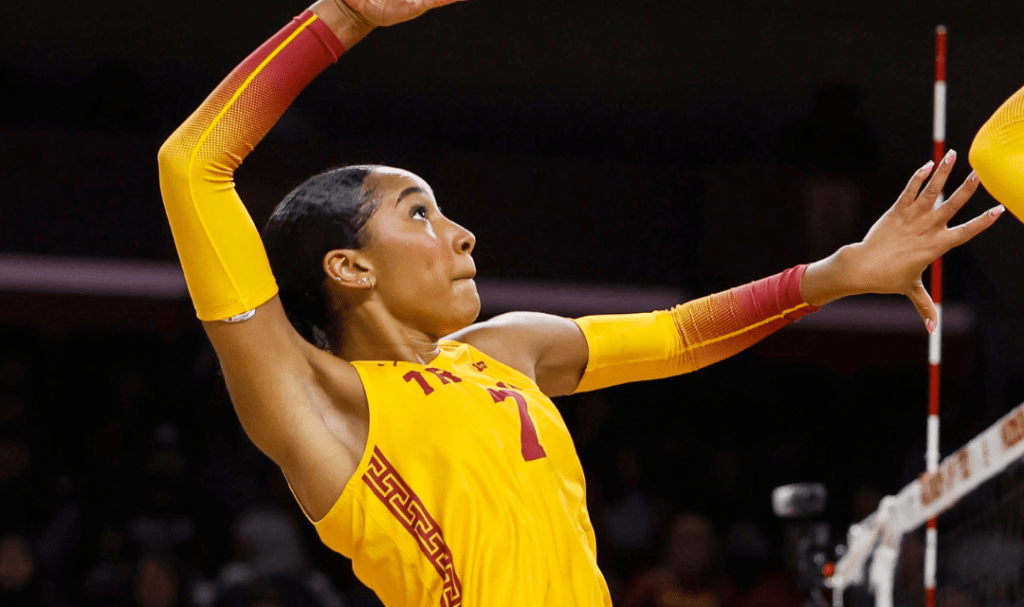
Leah Ford is one of those players who does her job quietly, but does it at a high level. In her second full season playing for the Women of Troy, she ended the season as the Big Ten’s second-best blocker by blocks per set, and routinely put up efficient attacking performances for USC as well. Honestly, Ford strikes me as a player who could easily put up closer to three points per set if she were only set more. During USC’s shocking second-round loss to Cal Poly in the tournament, I noted several times where Ford was up and available for a swing, only for the ball to be set to a pin who then failed to put it away. I’m not saying USC wins that match if she took more swings, but giving a player hitting .417 only 17 attempts over the course of five sets when (despite Cal Poly eating USC’s passers alive with their serving) there were opportunities to set her more frequently is representative of the larger feeling I get that Ford is being underutilized. Considering she made a jump in her scoring productivity between 2024 and 2025, I’m hopeful we’ll see her get more opportunities to swing and take another leap in her game in this upcoming season.
7. Lizzy Andrew, Stanford
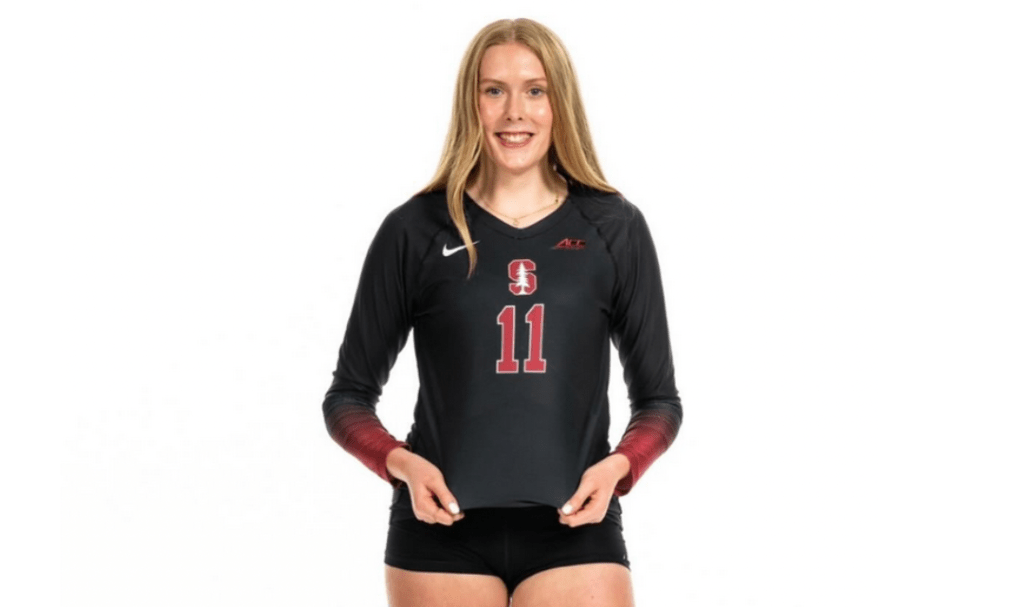
Lizzy Andrew is not what I would call a particularly flashy player, but damn is she effective. In her sophomore season at Stanford, her offense took a notable step up compared to her freshman year, as she raised her kills per set from 1.46 to to 2.42. Perhaps even more impressive, she raised her hitting percentage by .084 and ended the season as the fifth most efficient hitter in the nation.
What really stands out about Andrew is her consistency. She hit under .200 in only one match and under .300 in just six. Meanwhile, she recorded double-digit kills and hit .600 or better in five matches. Just as impressive is that her efficiency barely took a hit when she faced high-level competition; her efficiency against top-25 opponents was .434. While her blocking stats aren’t quite as impressive, Andrew still had some very respectable blocking performances this past season, including totaling nine blocks in each of her matches against Louisville and North Carolina.
6. Reese Ptacek, Kansas
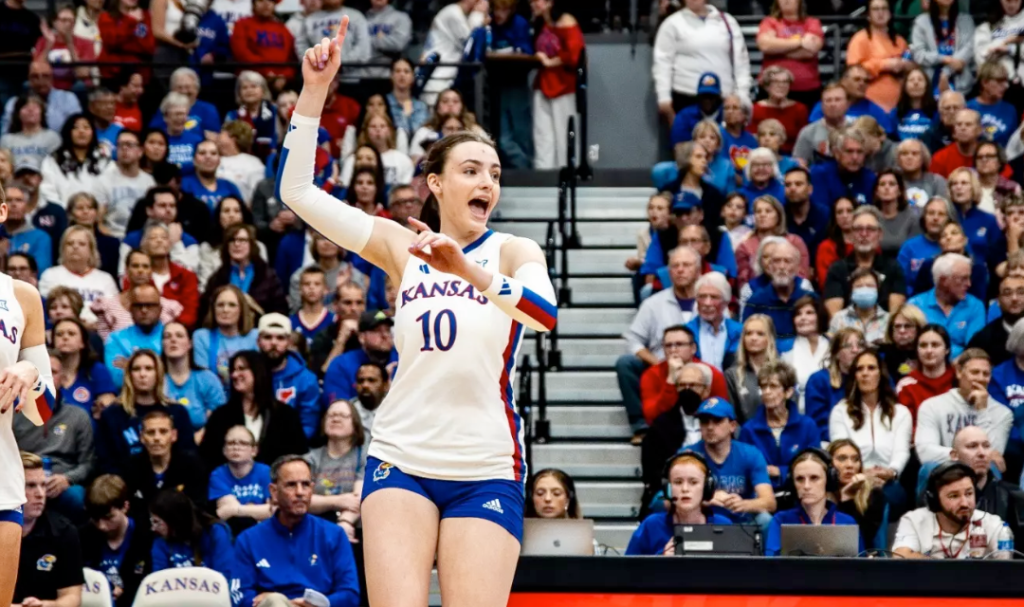
With strong attacking, good blocking, and impactful serving, Reese Ptacek is one of the more well-rounded middles in the NCAA. Though her 2025 hitting efficiency wasn’t especially high for a middle, she carried a heavier offensive load than most do in her position; with 5.42 attacks per set, she ranks third among all returning middles in Power 4 conferences. She ended the season at the Jayhawks’ second-highest points scorer (total and by set) and was only .40 points per set behind team’s leading scorer (opposite Jovana Zelenovic).
Ptacek’s best match this past season was against Iowa State, where she notched an impressive 21 points across just four sets and hit .556. That match is one that exemplifies her strengths—diligence on her blocking assignments and, above all else, an ability to absolutely thump on the ball when it’s set her way. If the team gets an in-system opportunity in the middle of a competitive rally, it generally seems inevitable that Ptacek will get the ball on the slide, at which point the chances of her slamming it down for a kill are high.
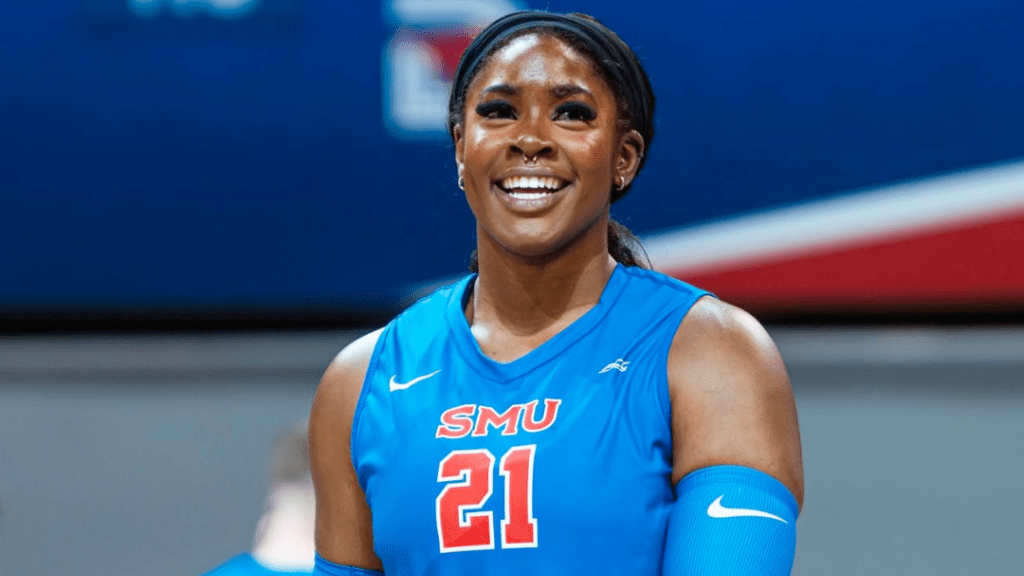
5. Favor Anyanwu, SMU
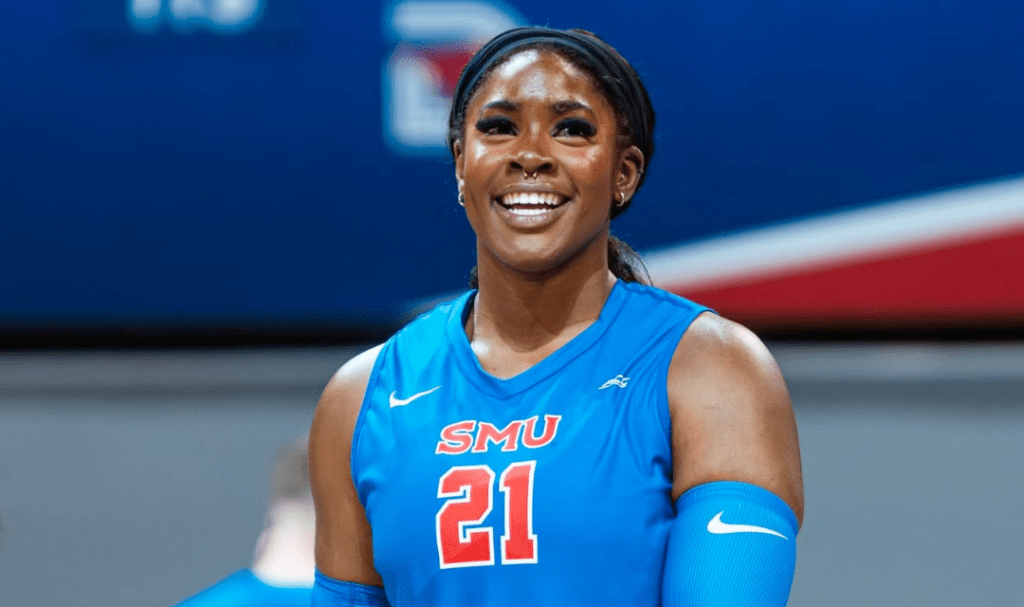
In reviewing Favor Anyanwu’s stats, my first thought was: “why the hell didn’t SMU set her more?” Then I remembered the Mustangs had Malaya Jones averaging over four kills per set on a ridiculous .376 hitting percentage from the right side. Nevertheless, I expect Anyanwu to take more swings this upcoming season, assuming that SMU’s passing allows for it. Based on what Anyanwu has proven she can do, she could very likely be putting up similar points per set numbers to my #1 and #2 picks.
But when we talk about Anyanwu, we have to talk about her blocking. By the end of the 2025 season, Anyanwu had recorded 178 blocks, making her 16th in the nation for blocks per set and fifth overall for total blocks. She was second in the ACC for blocks per set, trailing leader Cara Cresse by only .01, and notched a career-high 11 blocks in only three sets against UNI. And, as you would expect from the best blocking middle on this list, her blocking production increases against top-25 competition, rising to 1.57 per set.
4. Jaela Auguste, Wisconsin (previously Florida)
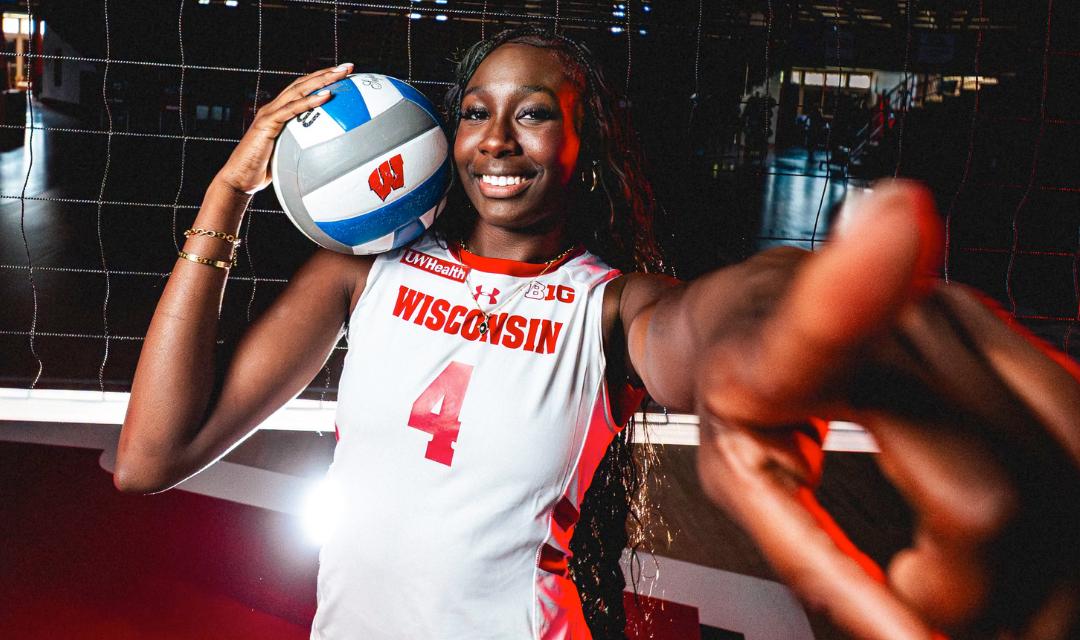
There are a few players on this list that I would put in a category I like to call “middles who can take over a match,” and Jaela Auguste is absolutely one of them. Even though Florida had a bit of a bizarre season, Auguste routinely put up outstanding numbers. In 17 of the 28 matches she played, she recorded double-digit kills, and she hit .400 or better in nine of those.
Beyond her strong attacking, Auguste’s serve is a major weapon that, even when she isn’t scoring an ace, helps shift the momentum of a match in her team’s favor. It’s both her offense at the net and serving that make up for her slightly low blocking numbers this season and earned her a top-four spot here, but don’t be fooled—she can still be plenty impactful on the block as well; in her second match of the season, she recorded eight blocks against Pitt, helping secure an upset of the preseason #3 squad. It’s safe to say that, in transferring in Auguste, Wisconsin has secured a big-time player and a very capable replacement for standout middle Carter Booth.
3. Bianca Garibaldi, Georgia Tech
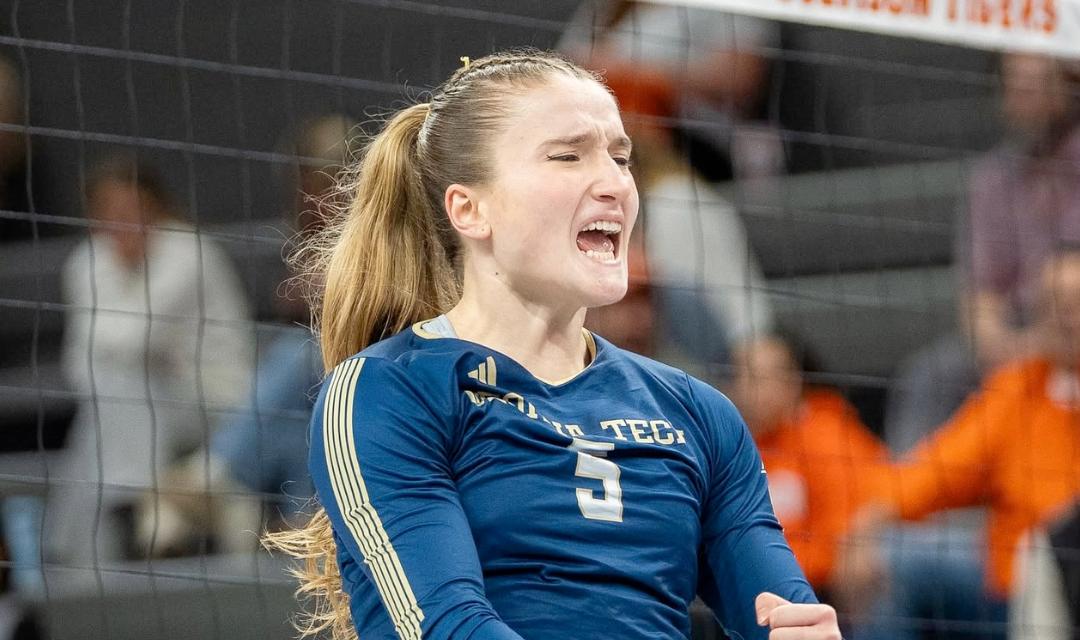
I’ll be honest—when I first started working on this list, I did not expect Bianca Garibaldi to be in third place. I’d caught enough of Georgia Tech’s matches during the 2025 season to know that she would likely make the top ten, but her stats really jumped out at me as I compiled data. After being mostly unutilized at Pitt, the numbers she put up in the same conference (third highest hitting percentage and eighth most blocks per set) probably had Dan Fisher wishing he’d done more to keep her around.
While Garibaldi’s hitting percentage dipped by about .100 against top-25 and top-50 opponents, her blocks per set remained steady, demonstrating what a diligent presence at the net she is. She recorded six or more blocks in ten matches last season, most notably putting up 10 blocks against SMU, and had double-digit kills in five matches. Given her efficiency, I wouldn’t be surprised to see her attacking numbers increase next season, assuming that Georgia Tech’s passing allows for it.
2. Marianna Singletary, UCLA
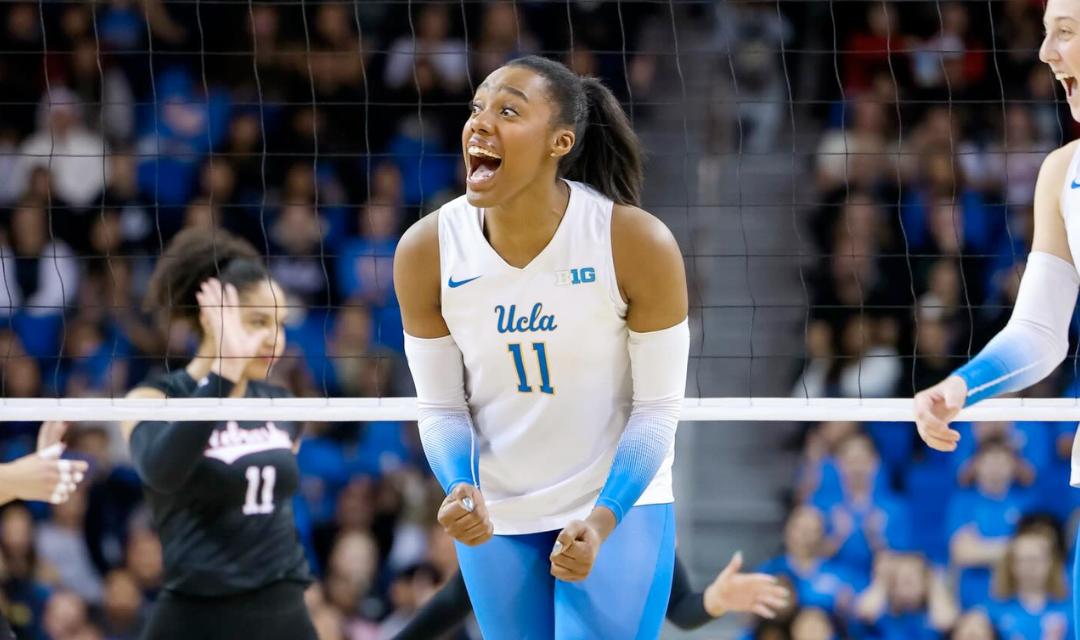
After signing several impact transfers, UCLA both did and didn’t have the season they were hoping for. On one hand, they made the tournament for the first time since 2021. On the other hand, they went 19-13, finished eighth in the Big Ten when it was predicted they’d place fifth, and accumulated some truly mind-boggling losses. But when the Bruins did look like the team that fans predicted them to be, chances are that it was because of Marianna Singletary.
Not only did Singletary finish first in the Big Ten for total blocks and fourth in terms of blocks per set, she also recorded double-digit kills in 13 matches. Her best match was her incredible 28.5 point performance in UCLA’s first round battle against Georgia Tech, where she registered a whopping 22 kills on a .556 hitting efficiency and contributed 11 blocks. Without Singletary’s lightning fast arm swing and ability to crush the ball both in front of and behind her setter, I’m not sure the Bruins would have even found their way in a fifth set with Georgia Tech, let alone end up on the winning side of that contest.
What’s especially impressive about Singletary is how her performance doesn’t waiver regardless of the competition she’s facing. Against top-25 teams, both her blocks per set and hitting percentage stats remained steady. In fact, when narrowing to just the five top-10 competitors UCLA faced last season, her blocks per set actually increased to 1.4. With perhaps an even stronger roster this upcoming season (despite the loss of Cheridyn Leverette, whose shoes will be hard to fill), Singletary may be poised for her greatest season yet.
1. Andi Jackson, Nebraska
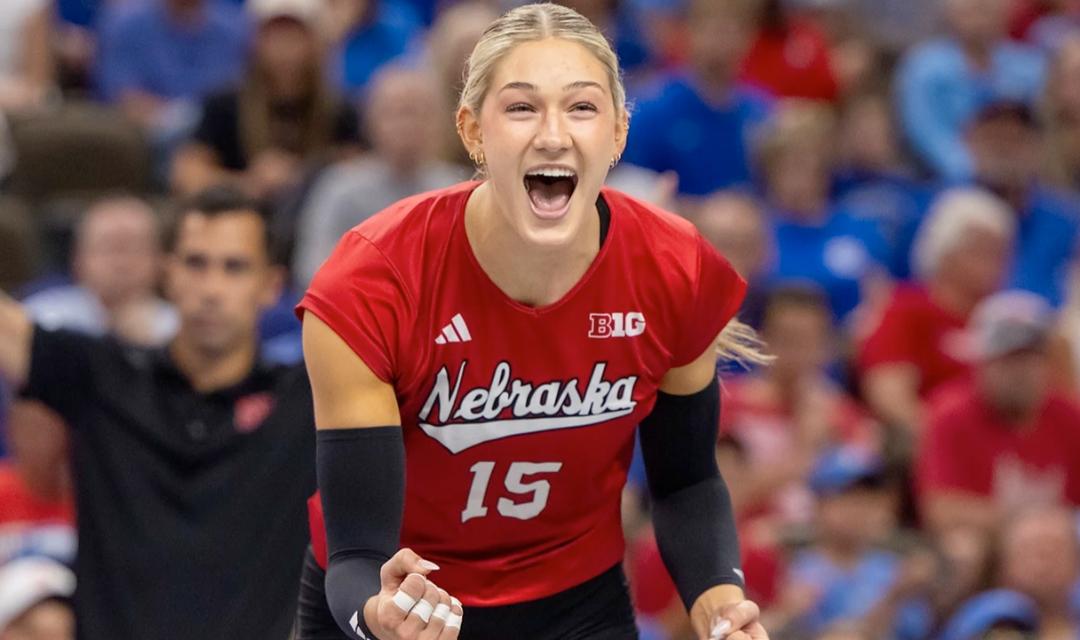
Of course, at the top of this list is the reigning (and first-ever) AVCA Middle Blocker of the Year. While I often point out that the “blocker” part of middle blocker is not what Andi Jackson is known for, her absurd attacking stats put her in a category entirely of her own. Perhaps most notable is her record-breaking performance in conference matches last season, across which she hit an outrageous .559. Sure, the Big Ten conference was in a bit of a slump in terms of competitiveness during the 2025 season, but that is still an unbelievable feat that I would be surprised to see eclipsed any time soon.
There are several recent NCAA middles who could be—and have been—dubbed the “slide queen,” but I truly can’t think of anyone whose slide attack beats out Jackson’s. After several months of getting accustomed to the slides by pros in MLV and LOVB, watching Nebraska’s spring match against Iowa State really put in perspective just how insane Jackson’s slide is. Her speed off the ground, the height that she reaches, and the power in her swing all make for an attack that is simply stunning to watch.
The slide may be Jackson’s superpower, but it’s not her only strength. She is perfectly devastating in front of the setter, whether on a quick set, the gap, or an off-the-net push that comes with having a setter as good as Bergen Reilly. And, while slightly inconsistent, her serve has proven to be an effective weapon as well. Though it’s hard to imagine her having an even better performance than the one she had in 2025, it will be fun to see how Jackson rises to the occasion in what may be her final season.