In the NCAA, outside hitters tend to be the position that garners the most attention from volleyball fans and media alike––and frankly, it’s well deserved. With the exception of stand-out opposite hitters like Olivia Babcock and Kennedy Martin, the NCAA’s list of top points scorers usually consist almost entirely of outside hitters. These players aren’t only relied upon by their teams for kills, both in- and out-of-system, but also are expected to pass, defend, block, and serve at a high level. In the past several years, players like Kyndal Stowers, Jess Mruzik, Madisen Skinner, and Logan Eggleston have proven that, if a team wants to win it all, they need an outside who can do it all.
Luckily, there is no shortage of fantastic all-around outsides in the NCAA. Some of the most exciting players to watch this upcoming season play on that left pin, and many of them seem to only get better and better as time goes on. This made it exceptionally difficult to put together a top 25, to the point that I nearly considered expanding the list to 30 until I realized I would probably just keep expanding it until I had something ridiculous like a top-50 list on my hands, and I imagine people want to read through a list of 50 players about as little as I want to write one.
As such, narrowing the list down to 25 required me to make some serious choices about what I most value in outside hitters. Six-rotation players immediately received preference, though there are a handful of front-row-only outsides whose stats are good enough to warrant a spot on the list. While good attacking numbers will always make up for lacking defensive numbers, I did also give an edge to players who do both at a high level. Finally, I based this entirely on stats and performances from last season, meaning that I did not take into consideration how high a player’s ceiling is. So, in the case of a player like Nebraska’s Teraya Sigler, the fact that she primarily played as a defensive specialist last season means that she did not have the stats to earn a spot on this list, even if I think she is going to have a breakout year as a six-rotation player this season.
With all that said, let’s get into the list!
25. Claire Little Chambers, BYU
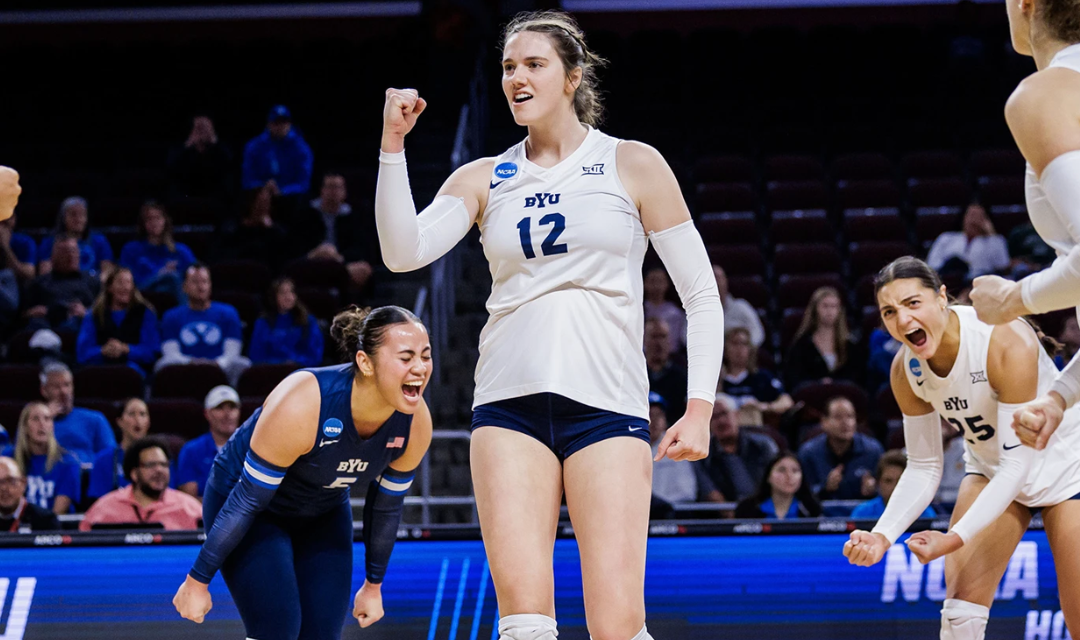
While Suli Davis stole the show at BYU last season, Claire Little Chambers is a high-level outside hitter in her own right. With the spotlight likely to be back on her this upcoming season, Little Chambers will likely be taking on even more offensive responsibilities than she already has. Of course, she’s no stranger to taking a lot of swings in a match; she recorded 59 attempts in just four sets against Utah Valley, with a return of 25 kills. Where the challenge will be for Little Chambers is in her ability to score efficiently against top teams. Her efficiency took a hit of nearly .100 against top-25 competitors this past season, but she won’t have Davis around to provide relief in those situations. Her best top-25 performance came in a three-set win over Kansas, where she recorded 13 kills on a staggering .522 efficiency. This is the type of performance that she’ll need to bring more often for BYU to be successful, especially if they want to make it out of the first round of the tournament.
24. Payton Petersen, Louisville
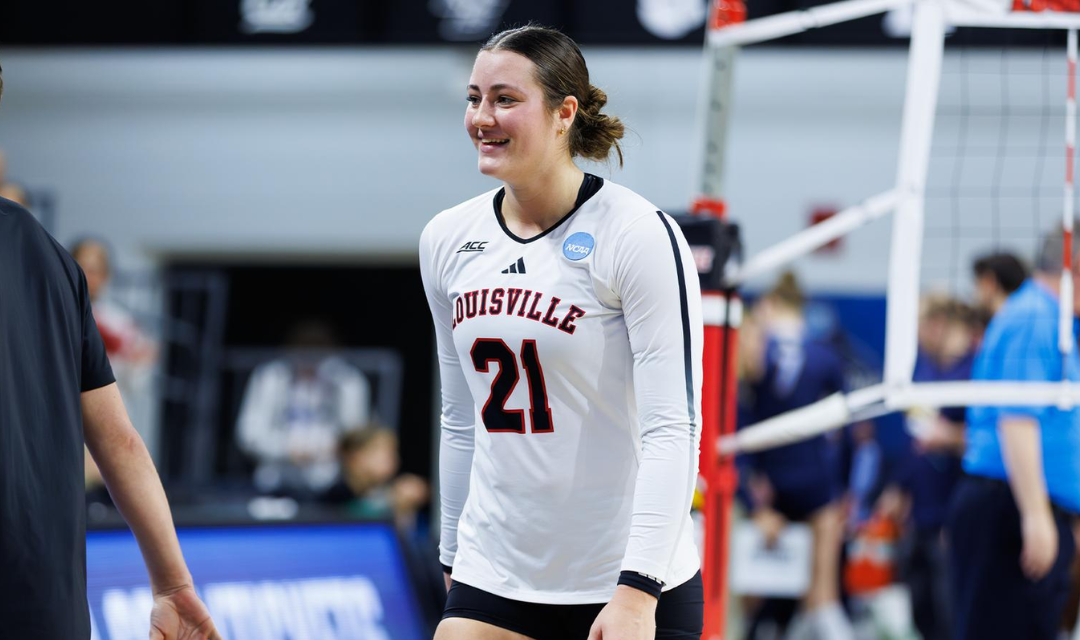
“Payton Petersen…who are you?!” I’d like to personally thank Courtney Lyle for giving us that incredible soundbite during the 2024 semifinals, in which Payton Petersen replaced an injured Anna DeBeer against Pitt. After barely seeing court time all season, Petersen was charged with replacing the team’s leading scorer in a match against their biggest rival—one they’d lost to twice already that season—and boy did she leave an impression. I can still hear Lyle’s astounded “oh my gosh!” when Petersen dug two absolute bombs from Olivia Babcock and Torrey Stafford, then finished the play with a sneaky tip—prompting the quote at the beginning of this paragraph. I found myself thinking of that moment frequently throughout the past season, as Petersen has a way of making magic happen on the court, often seemingly out of nowhere.
Petersen’s biggest strength, without question, is her ball control. Along with Chloe Chicoine, she kept Louisville in-system even against some of the toughest serves the NCAA had to offer, and her digs per set barely dipped (to 2.54) against top-25 competitors. Where there is a question in Petersen’s game is her consistency. Some matches, like her 24 kill match on a .354 efficiency against Miami, she is simply on fire, making jaw-dropping plays that leave announcers (and me) speechless. Other times, she is extremely error-prone; even when she gets a high volume of kills, she does so at a low efficiency, as exemplified by her 19 kills on a .091 efficiency against Texas. Still, there is a lot to like about Petersen’s game and her potential to grow upon what she’s already demonstrated on the court. After being named a Best Spiker at the U21 Pan-American Cup this summer, it’s possible that Petersen is primed for her best season yet.
23. Jaidyn Jager, Indiana
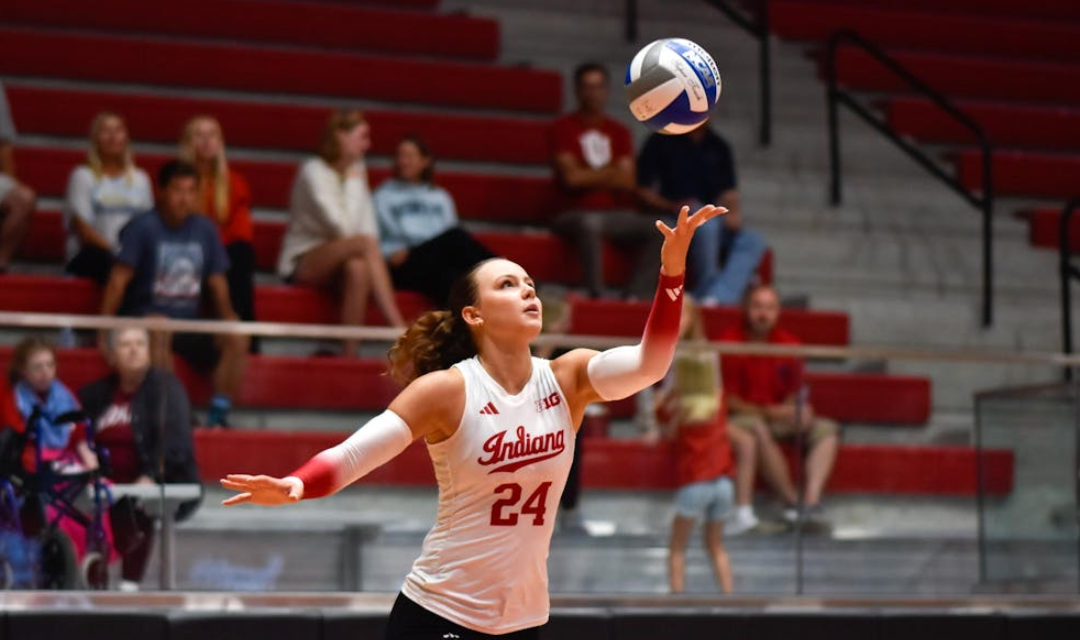
After not seeing much hype around her prior to the season, Jaidyn Jager emerged as one of my favorite newcomers to watch last year. Despite being a freshman, she held her own in all facets of the game, bringing steady ball control and reliable scoring to an Indiana team that punched well above its pre-season expectations. With 14 kills on a .393 efficiency as well as 12 digs, she played a big part in securing Indiana’s second-ever win over Penn State, and her 15 kills hitting .375 helped Indiana cruise past Colorado in the second round of the NCAA tournament. Now that Avry Tatum and Candela Alonso-Corcelles have graduated, Jager’s ability to step up as a go-to scorer in their stead will be a critical component of Indiana’s continued success.
22. Ksenia Rakhmanchik, Baylor
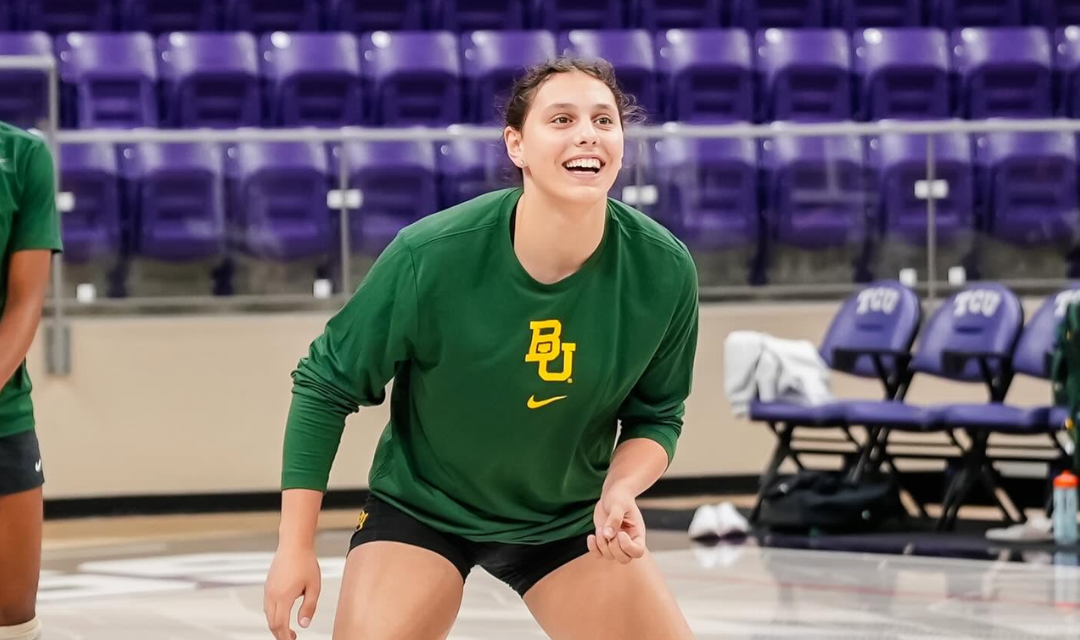
Coming from the capital of Belarus to deep in the heart of Texas, Ksenia Rakhmanchik did not let what must have been quite the culture shock impact her ability to score points. As a freshman (and only a 17-year-old one at that), she led her team in points and set the program record for most kills in an NCAA tournament match by a freshman with 32 against Arkansas State. That came only about a week after she dropped 30 points in a five-set win over TCU. Also impressive is the fact that Rakhmanchik’s points production only dropped to 3.96 per set against top-25 teams while her hitting efficiency increased to .254. With a total of 367 kills in her freshman season, Rakhmanchik is behind only Yossiana Presley in terms of most points scored by a freshman at Baylor. If she continues on a similar trajectory as the former National Player of the Year, then Baylor fans have a lot to be excited about for the future.
21. Jordyn Byrd, Florida
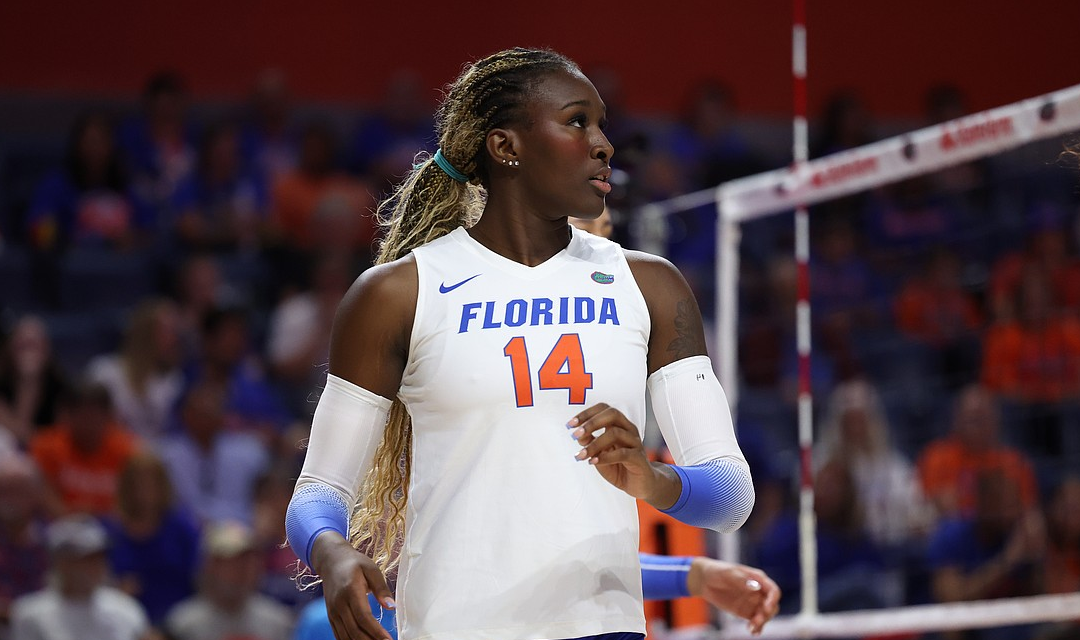
After two seasons, Jordyn Byrd left Texas with a championship ring but without a scrap of playing time to her name. That changed when she transferred to Florida, where she immediately got the chance to prove why she deserves to be on the court. She made quite an impression in her first two matches with the Gators, recording 40 kills on a .265 efficiency against top Stanford and Pitt. From there, both Florida and Byrd’s performances were quite up and down.
I was tempted to rank Byrd inside the top 20, but ultimately chose not to for two reasons, the first being inconsistency. Some matches, Byrd came out absolutely on fire, such as the first-round sweep of Rice in which Byrd hit .310 with 18 kills. Other matches, however, were not as favorable; she had a three-match streak toward the end of the season where she hit under .100, for example. My second reason for having her this low is her defense—she rarely played in the back row last season (as demonstrated by her digs per set) and was somewhat of a liability when she did.
Some of this is not on Byrd entirely, however. Florida’s starting setter changed from Alexis Stucky to Taylor Parks seemingly at random, leading to understandable connection problems, and many of the other hitters the Gators tried to put on the court alongside Byrd weren’t able to score nearly as reliably as she could, leading to opponents zeroing in on stopping her. With (hopefully) more stability and support in the 2026 season, I expect Byrd to achieve more consistent offensive numbers.
20. Kyleene Filimaua, Florida State
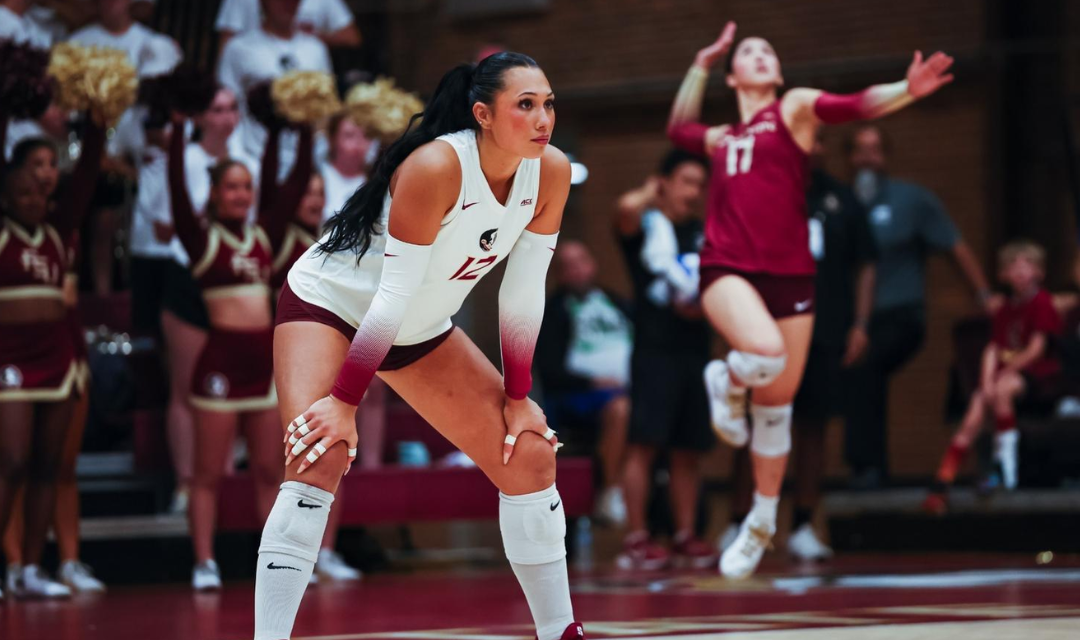
Being both an indoor and beach player, Kyleene Filimaua has one of the most complete all-around skillsets in college volleyball. While her hitting efficiency ended at barely over .200 this season, it’s her ability to elevate her scoring production in big matches combined with her defensive hustle that earns her a spot on this list. Filimaua spent her first season with Florida State primarily in the libero jersey, but has since become a key six-rotation player for the Seminoles. This past season, she was in the team’s top five for every key statistical category, including being the top scorer (in terms of total points), best server, and second-best floor defender. There’s even more that she does for her team that doesn’t end up on the stats sheet, like being rock solid in reception and routinely getting teams out of system with her deceptively tough serve. If Florida State hopes to return to the post-season tournament, Filimaua’s ability to elevate her efficiency as well as her production in the wake of Iane Henke’s graduation will be paramount.
19. Avah Armour, UCF
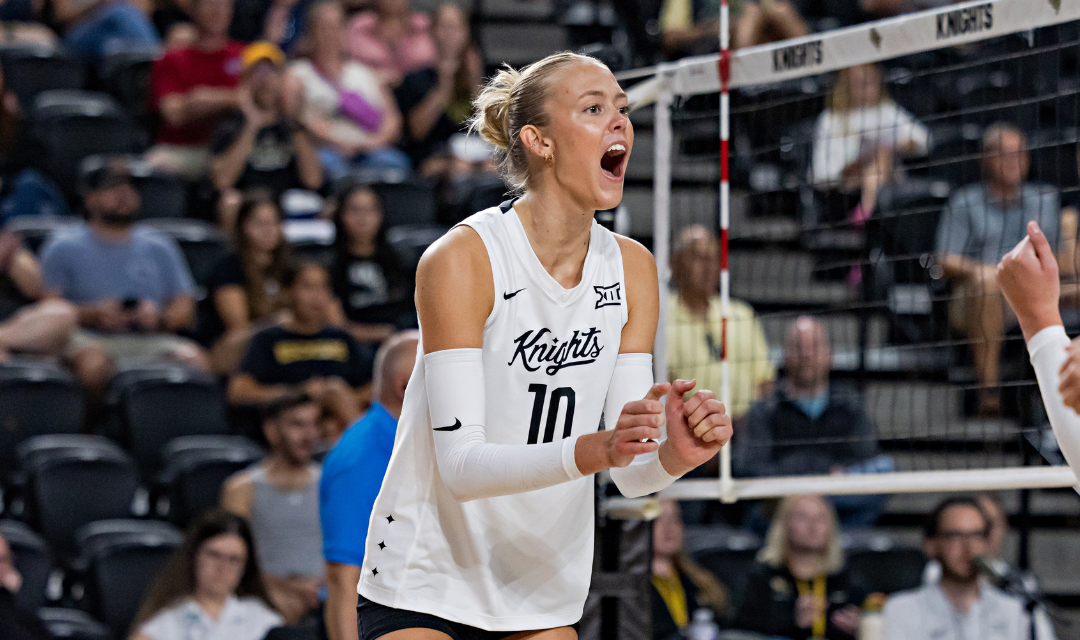
With UCF being a bottom-half Big 12 program, Avah Armour doesn’t get a lot of attention in volleyball discussion spaces, but you only have to watch one match to see what an underrated player she is. At 6’5”, she brings a whole lot of height to the net, making her a deadly attacker and a formidable blocker. Her all-around scoring game made her the seventh-leading scorer in terms of points per set in the Big 12 during conference play—most notably, putting her ahead of Arizona State’s Noemie Glover (by less than a tenth of a point per set, but still worth mentioning). With 513 points on the season, she placed in the top 40 for points scored nationally.
She is one of many players on this list whose point production and efficiency increased dramatically from 2024 to 2025. As a sophomore, Armour hit .190 with 3.26 kills per set; as a junior, she averaged 4.35 kills per set on a much improved .254 efficiency. In 2025, she had only two matches in which she scored fewer than ten points (in both cases, she was just shy with nine) and eight matches in which she scored 20 or more points, including two 30+ point matches. Notably, her 25 kills on a .449 efficiency led the Knights to a mid-season upset of BYU (this came only four days after the team lost a four-set match to a Texas Tech team that ended up tied for last place in the conference, proving that you truly can never predict what is going to happen in the Big 12).
18. London Wijay, USC
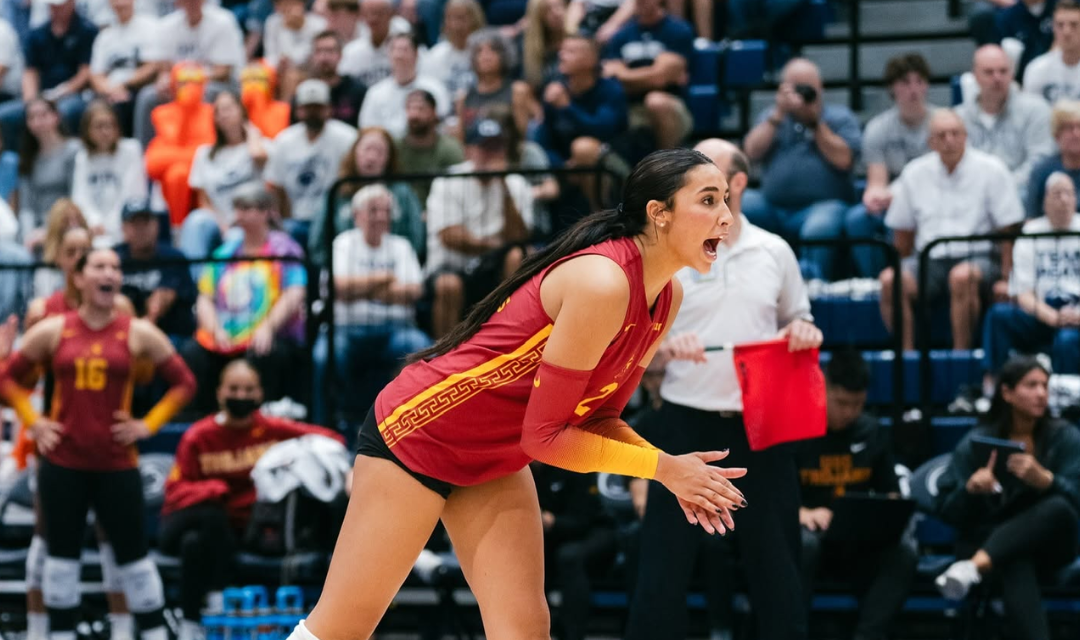
After being sidelined during the 2024 season due to injury, London Wijay came back with a vengeance. With Ally Batenhorst graduating and Jadyn Livings transferring out of the program, Wijay had to take on the bulk of the offensive load for a relatively young USC team, and she more than rose to the occasion. On the back of big-time performances against Minnesota (26.5 points, .365 efficiency) and Wisconsin (25 points, .308 efficiency), Wijay earned Big Ten Player of the Week twice and helped propel her team to its best season record in ten years.
Like so many top outsides, Wijay does far more for her squad than just score points. She is well on her way to being an elite ball control player, already showing extremely disciplined passing and impressive defensive grit. Of all players on this list, Wijay sees the highest jump in her digs per set numbers when playing against top-25 RPI teams, going from 2.19 to 2.64. Notably, her scoring production increases to 4.1 points against the same level of competition, while her hitting percentage remains steady. With Reese Messer having left USC for Kansas, it’ll be interesting to see how Wijay’s production is or isn’t impacted by the new setters on campus.
17. Bianna Muoneke, Georgia
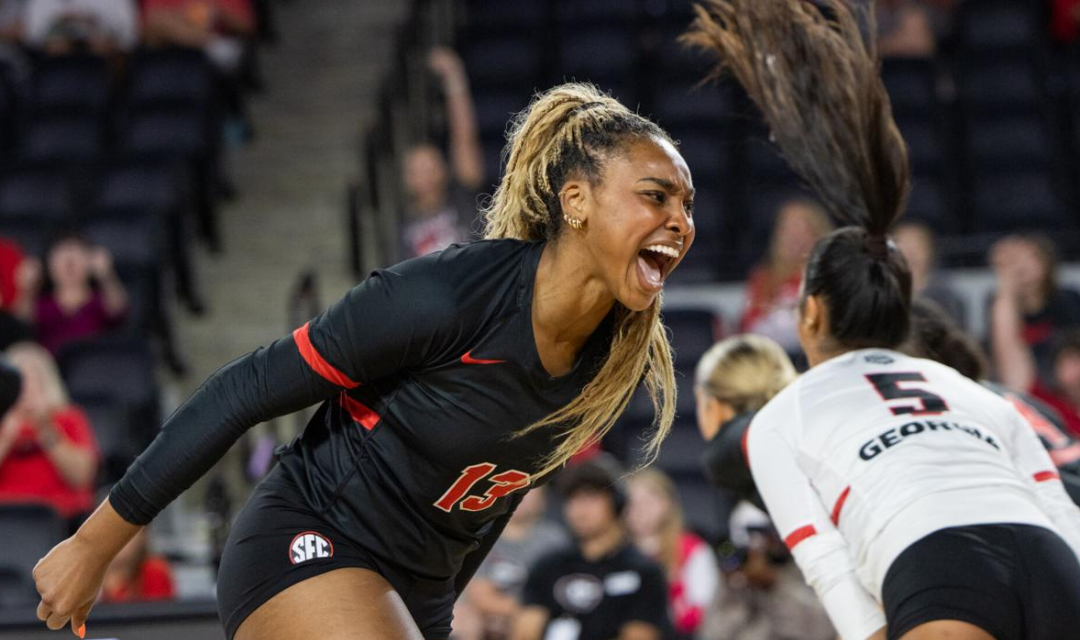
Despite being largely overlooked by volleyball media, Georgia ended the 2025 season with a record that put them in the top half of the SEC, just behind Florida, and Bianna Muoneke played a huge role in getting them there. After Sophie Fischer graduated, Muoneke stepped into the role of Georgia’s go-to scorer without missing a step. In fact, she ended up increasing her points per set by 1.07 while raising her hitting efficiency by 0.70. With nine double-doubles and 10+ kills in all but two matches, Muoneke ended the 2025 as Georgia’s leading scorer and the team’s second best digger.
Even during losses to top teams, Muoneke was rarely slowed down—she had 14 kills on a .286 efficiency against Texas and hit over .300 against eventual champions Texas A&M. If the Bulldogs can get reliable scoring from another pin (Iowa transfer Alyssa Worden, perhaps?) this upcoming season, Muoneke and Georgia may just find themselves with an at-large bid to the tournament.
16. Lauren Dreves, Auburn
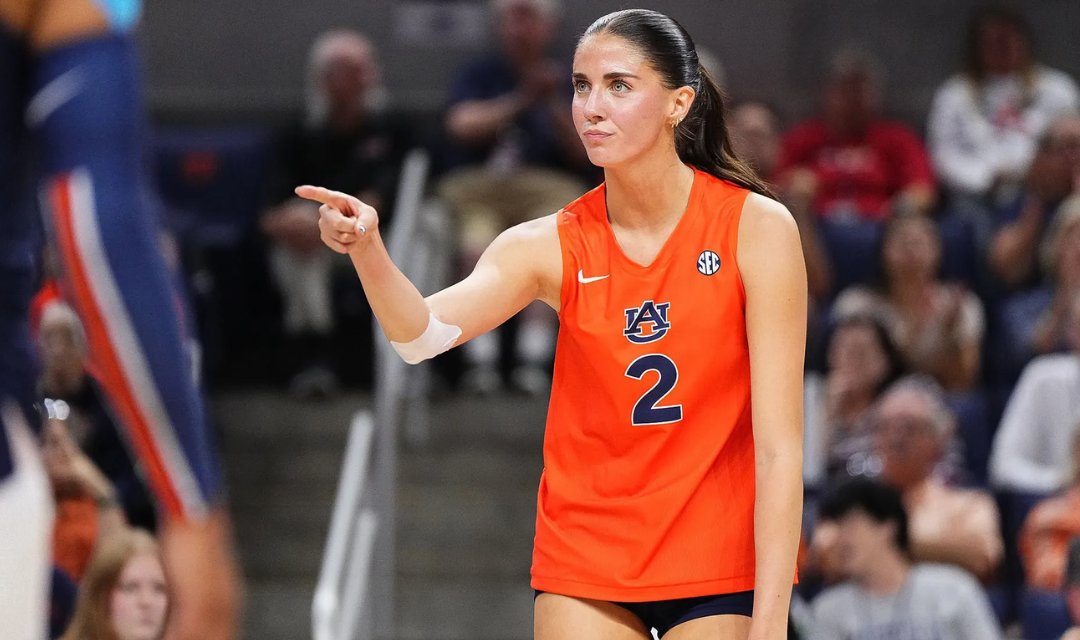
Like others on this list, Lauren Dreves is a player who goes mostly under the radar in fan spaces due to her team’s record. Even though Auburn hasn’t made the tournament during her first two seasons with the program, she has been an excellent player for them, especially during the 2025 season. From her freshman to her sophomore year, she increased her kills per set by over 1.5 and added .100 to her hitting percentage. She ended the season as the team’s top scorer and earned a place on the All-SEC First Team.
Though she stands at 6’1”, I find that Dreves plays more like someone who is 6’3” or 6’4”. She has a wonderfully high contact point that she uses to slam balls down to the middle of her opponent’s court while also being an exceptional blocker. And she’s no slouch in her backrow duties, either. She brings stability in serve receive, keeps a lot of balls off the ground, and has a fantastic backrow attack to boot. If she continues on the trajectory of growth that we saw between her first and second seasons, she will be a dominant force for the Tigers in 2026.
15. Sydney Nolan, Cincinnati
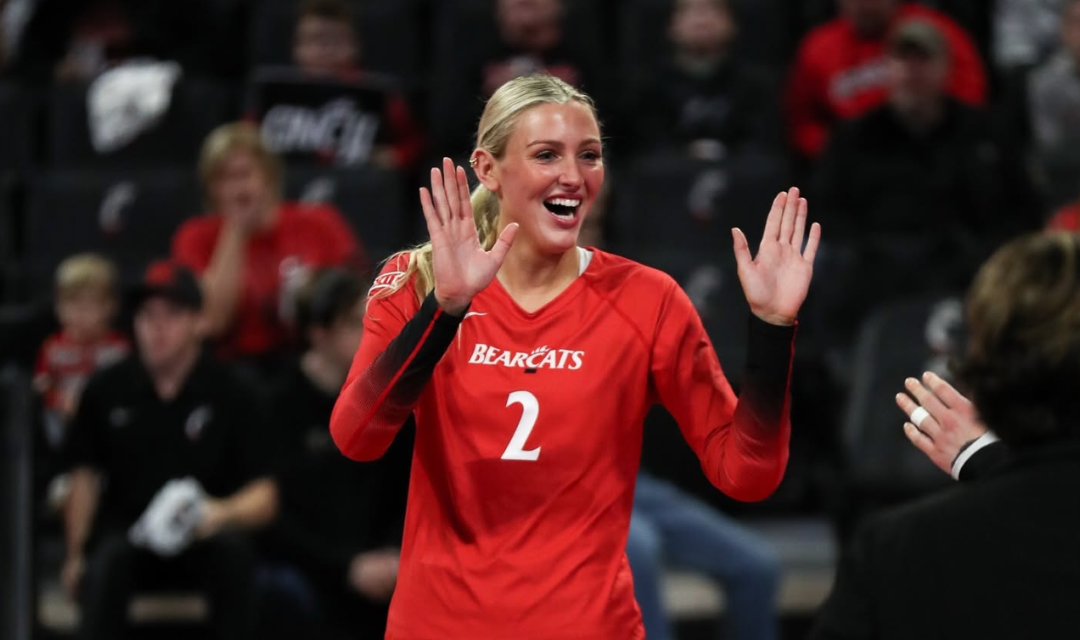
With over five points per set and a .305 hitting efficiency in the 2025 season, Sydney Nolan may just be the most underrated outside on this list. One might be tempted to wave away those impressive numbers by suggesting that her level of competition Cincinnati faced wasn’t especially high, but the numbers don’t support that. The average RPI of Nolan’s 2025 opponents was 69, and of all the outside hitters on this list, she has the highest hitting efficiency against top 25 opponents (an impressive .358).
When you watch her play, you can instantly see how she is so offensively dominant. She stands at 6’4”, giving her a high contact point that allows her to sky over opposing blocks and hit sharp angles. But it isn’t just her physicality that gives her an edge; she has a wide range of shots, which comes in handy for someone who takes an average of 45 swings each match. What holds Nolan back from a higher position on this list is that she typically only plays 3.5 rotations. She’s a scoring machine when she’s in the front row, but not playing in the back row or taking on passing responsibilities limits the impact she has on her team’s success. Still, she’s an excellent player who honestly deserves way more attention than she gets. If Cincinnati can put together a half-decent record this upcoming season, I’d love to see Nolan get an All-American honorable mention.
14. Lindsey Mangelson, Mississippi State
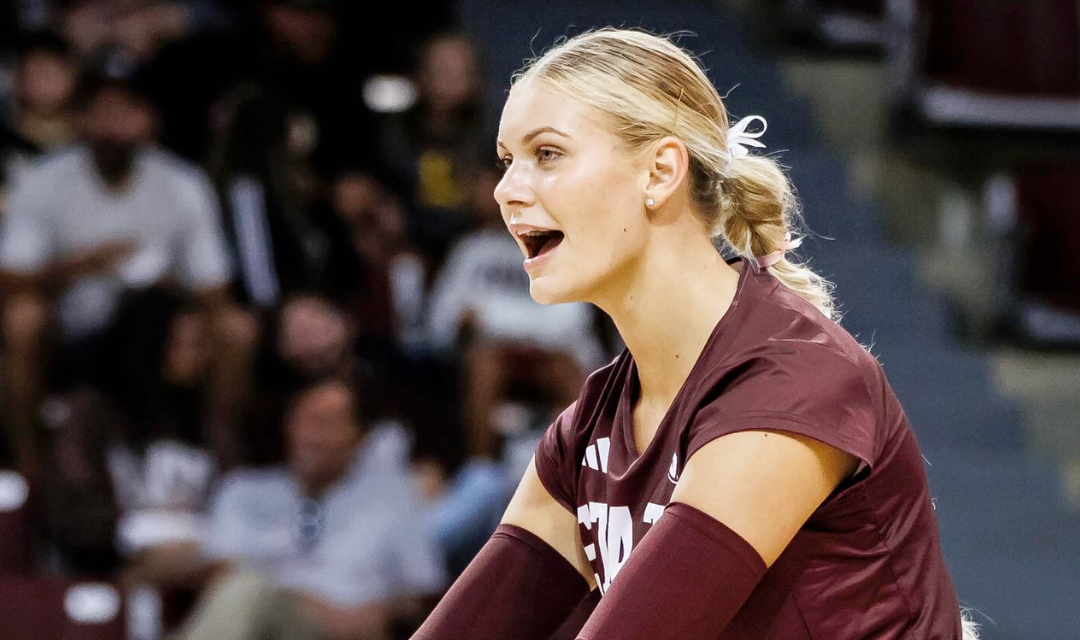
Described by her coach as “the most underrecruited kid in America,” Lindsey Mangelson’s name was not circulating in the volleyball world much ahead of the 2025 season. Flash forward to a few weeks into the non-conference schedule, and she’s leading the entire nation in points per set. Once SEC play started up, she fell out of the top 5 fairly quickly, but still ended the season ranked 27th for points per set nationally.
While her best numbers came against lower RPI teams, she still was more than competent against the five top-50 programs that Mississippi State played. She notched 16 kills on a .209 efficiency against Kentucky—which is better than most outsides, let alone freshmen, could say this past season—and also had double-digit kills and a .250 or higher efficiency against both Texas A&M and Tennessee. On her hitting alone, she may not be quite inside my top 15, but her all-around game is what lands her here. Mangelson passed the most balls of anyone on her team but only gave up 18 errors on 487 receptions (a 3.7% error rate is quite low for NCAA outsides). She also recorded ten double-doubles, was her team’s second-most effective server, and was the Bulldogs’ the best blocker on the pins. All in all, despite Mississippi State’s struggles in the latter half of the season, Mangelson put up an exceptional freshman campaign.
13. Morgan Gaerte, Kentucky (previously Notre Dame)
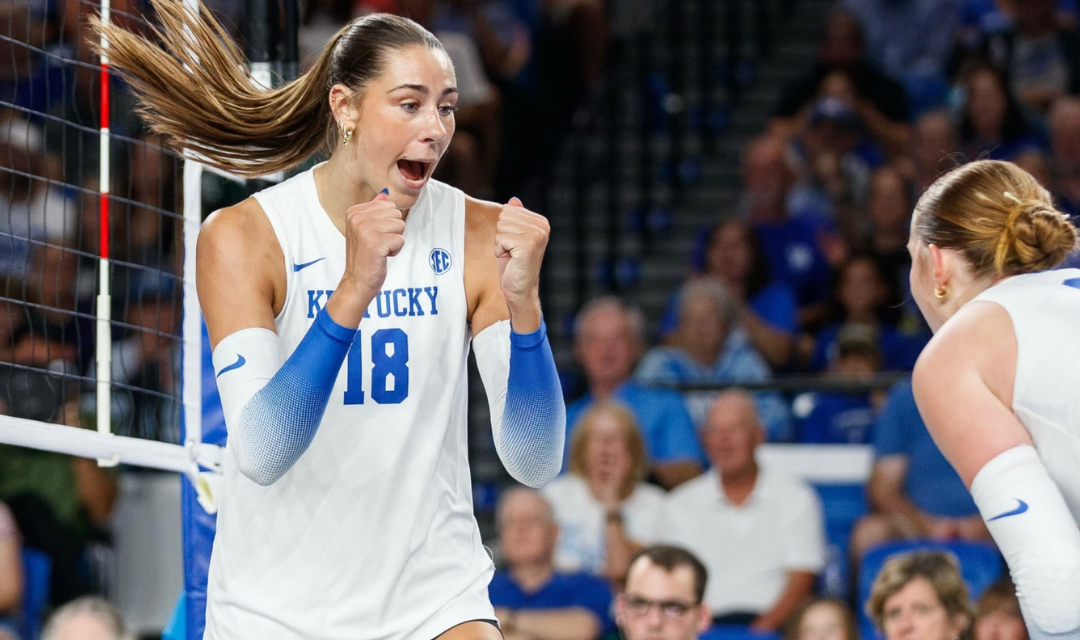
Note: Based on spring matches, it looks like Kentucky is planning to use Gaerte at opposite. I’m choosing to include her on this list because all the data and footage we have on her is from her time at outside, and this is where I would place her regardless of position/program changes.
If it weren’t for the fact that she played her first two seasons for a mid-tier ACC team, Morgan Gaerte would probably be one of the bigger names in college volleyball by now. I wouldn’t be surprised if her feeling the same way is partially what led her to enter the transfer portal and come out of it as a Wildcat. While her ball control leaves something to be desired—to the point that she was regularly subbed out during her back row rotations despite often being the only attacker who could reliably score—she makes up for it by being truly astounding as a hitter.
At 6’5”, she has a sky high contact point and hits some truly absurd angles, while also being a solid blocker and a very strong jump server. If Gaerte continues jump serving and fellow Kentucky hitter Brooklyn DeLeye brings back her own jump serve (a slightly less error-prone one, perhaps?) then Kentucky stands to be one of the toughest serving teams in the country. While I’m not convinced (yet) that Gaerte is going to be a one-to-one scoring replacement for Eva Hudson, she’s certainly going to be a massive part of what makes Kentucky a national title contender once again.
12. Natalie Ring, Texas A&M (previously Marquette)
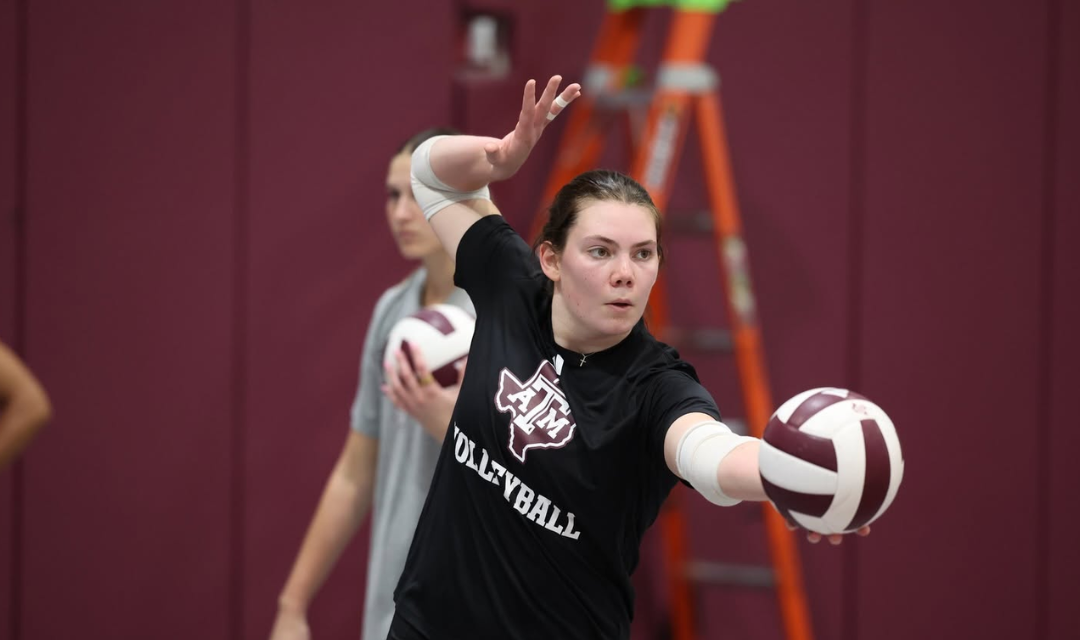
With a 76% increase in kills per set between the 2024 and 2025 seasons, Natalie Ring emerged as one of the nation’s leading point scorers and helped Marquette come within a hair’s breadth of sending Louisville packing during the second round of the tournament. By the time Marquette’s third match of the season was over, Ring had already racked up 94 points (6.3 per set) thanks to three consecutive 30+ point matches right off the bat. This dominance would continue throughout the season, culminating in her 31-point match against the Cardinals.
It may be tempting to chalk up Ring’s dominant 5.16 points per set (13th in the nation) to the fact that she plays in the Big East, but Ring’s point production actually increased to 5.31 during matches against top-25 teams. This ability to elevate against top competition likely played a big role in Jamie Morrison jumping at the opportunity to make Ring an Aggie when she hit the portal. While it remains to be seen if Ring can reach that level night in and night out against a higher level of competition than what she saw in the Big East, she (alongside Kyndal Stowers) will doubtlessly be a force at the net for the reigning national champions.
11. Kenna Wollard, Purdue
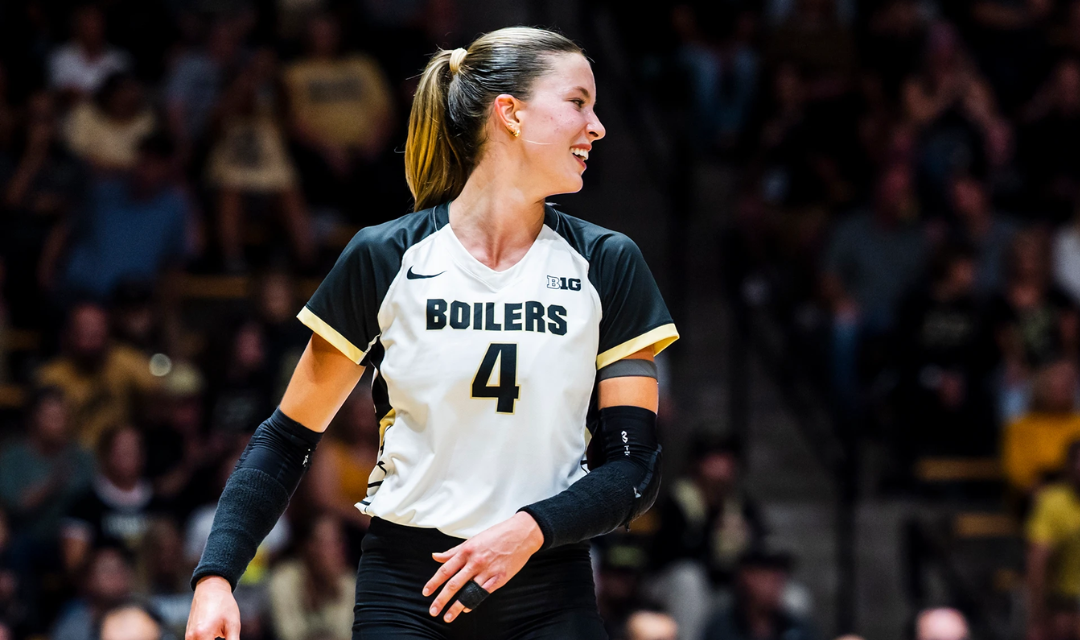
After the departures of Chloe Chicoine and Eva Hudson, combined with the graduation of Raven Colvin, hopes were not especially high for Purdue volleyball; the Boilermakers were ranked 15th in the preseason AVCA poll and predicted to finish 7th in the Big Ten. But the team exceeded all expectations, ending the season ranked 8th nationally and 3rd in the Big Ten only behind Nebraska and Wisconsin. And Kenna Wollard was a major reason why.
Wollard played her first two seasons at Purdue as a three-rotation opposite, but became a six-rotation outside to fill the unexpected void at that position. The change in position and elevated responsibilities did not phase Wollard at all—she went from 1.6 kills per set on a .227 efficiency in her sophomore year to 4.4 kills per set on a .262 efficiency in her junior season. And while ball control is still not the strongest area of her game, Wollard recorded more than five times as many digs as she did in her first two years at Purdue combined. By the end of the season, she had 11 double-doubles and registered 20 or more kills in nine matches.
Oddly, most of Wollard’s less impressive performances came against lower-tier teams; she was held to nine kills on a .074 efficiency against Rutgers and eight kills hitting .121 against Houston. Meanwhile, several of her most dominant performances came against top-50 programs. It was her 33 kills on a .369 efficiency that powered Purdue to a reverse sweep of UCLA early in Big Ten play, and she was extremely impactful in the post-season tournament, finishing with 69 kills on a .423 efficiency across four matches.
10. Chloe Chicoine, Louisville
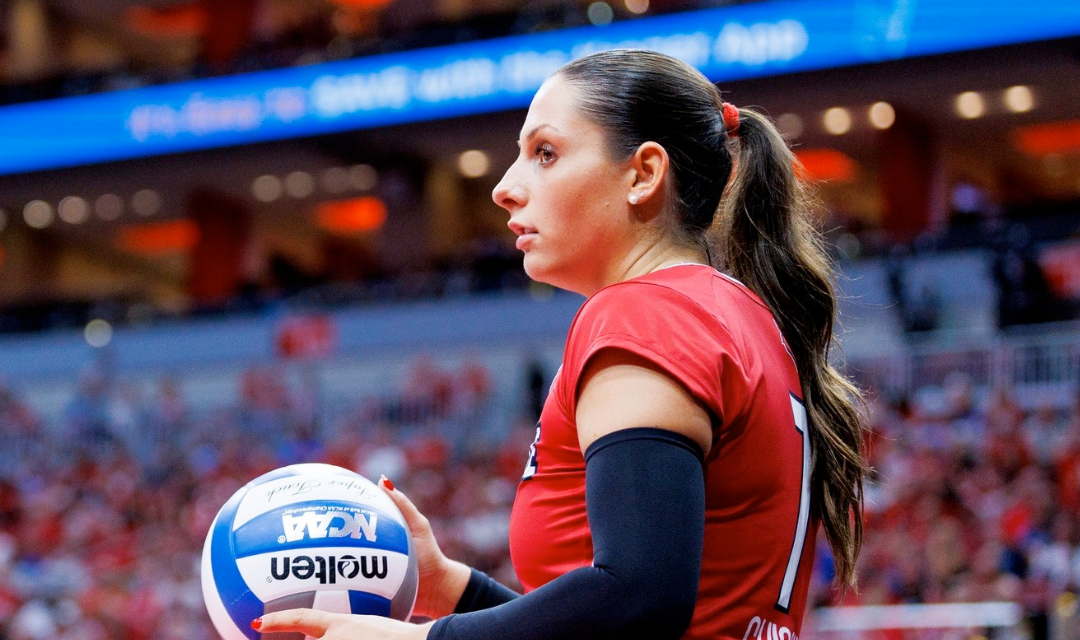
Chloe Chicoine isn’t one of the top points scorers on this list, but her floor defense, passing, and efficiency more than warrant a spot in the top ten. In the back row, she truly plays like a libero, to the point that she spent a lot of time playing in the left back area of the court last season. Her pass-to-attack strength is also notable, as she regularly helps her team side out on the first ball with a dime pass into a strong kill. Her best match came against a fiery Marquette team in the second round of the tournament, where her 28 kills on a whopping .415 efficiency helped her team squeak their way into the Sweet 16.
In my opinion, Louisville slightly underutilized Chicoine’s full skillset last season—while she had the most attempts of anyone on the team, she rarely ever was afforded the opportunity to swing out of the backrow, which is an area she has proven to have success from. Adding a bit more dimension to Louisville’s offensive system could prove to be what Chicoine needs to be even more effective and what the team needs to come out victorious in five-set matches.
9. Jurnee Robinson, LSU
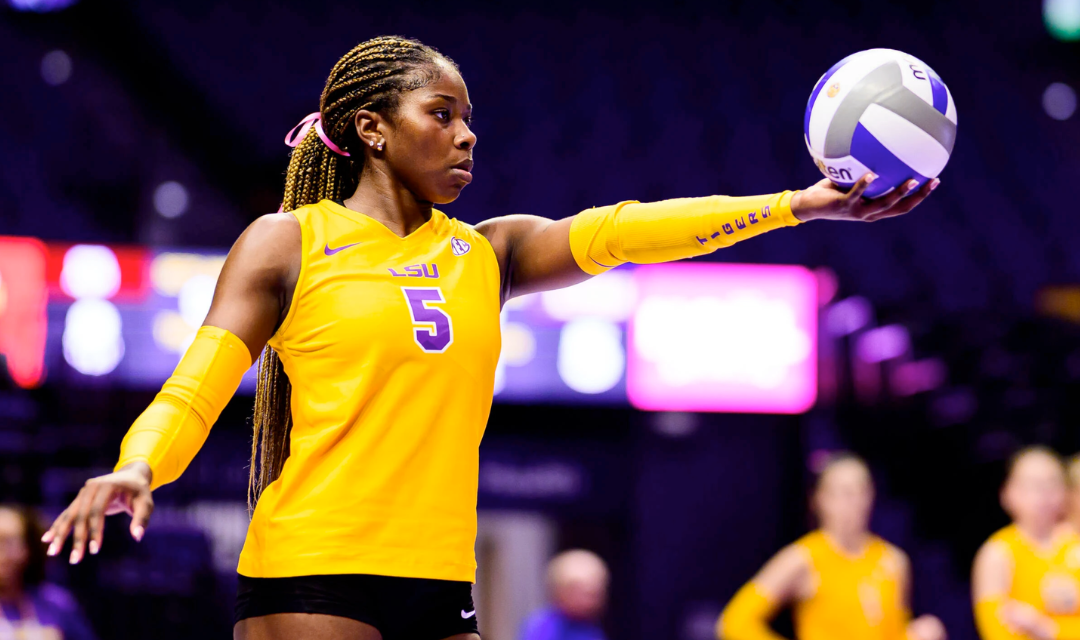
Fans often lament the plight of players like Olivia Babcock and Kennedy Martin, each of whom has experienced at least one season where they’ve had to put their team on their back and carry them through to success. To this I say: sure, but at least they get First Team All-American placements and tournament berths out of it. The same cannot be said for Jurnee Robinson, who, despite totaling more than 1,500 points in her three seasons at LSU, has not played in a single post-season match or received half as much recognition as she deserves.
In her sophomore season, Robinson averaged 5.5 points per set on a .224 efficiency and was not even recognized as an AVCA All-American Honorable Mention (I’m still mad about this). The AVCA did give her an honorable mention this past season, even though her points per set went down slightly and her hitting percentage remained the same. To be clear, this is not to say she didn’t deserve any kind of recognition in 2025, but rather that she most certainly should have received it in 2024.
When Nia Washington transferred from Ole Miss to LSU before the 2025 season, I thought to myself, “finally, Jurnee Robinson is getting some help.” And while that proved to be somewhat true, Robinson still was by far the top scorer on the team, totaling nearly 200 more points than the next highest scorer (Washington). Her performance is doubly as impressive considering she also led her team in digs—both overall and per set. While she hasn’t seen as much success with LSU as she might have at another program, I have serious respect for Robinson’s choice to stay with the Tigers all four years, when she likely could be getting more recognition (and money) at another program.
8. Kamryn Gibadlo, Utah
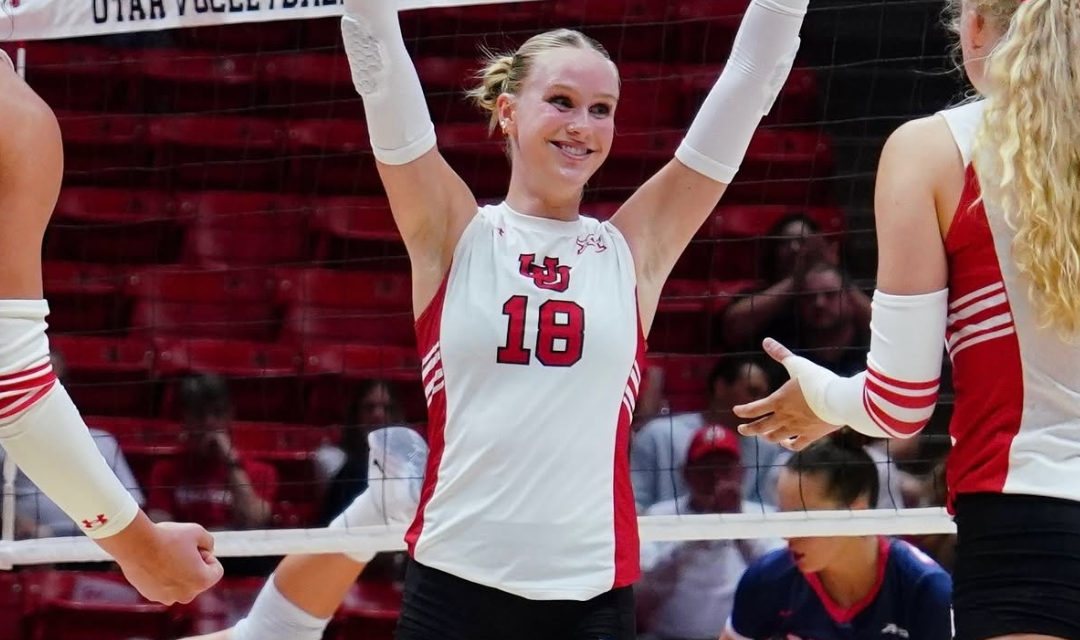
Utah’s season never quite lived up to the promise they showed at the beginning of the fall (they were, after all, one of the few teams last year to take a set off of Nebraska). But when they were successful as a team, Kamryn Gibadlo was the driving force behind it. On the back of high-level attacking and tough serving, Gibadlo recorded 20+ points in 13 matches, with her season- and career-high coming in the form of 28.5 points in four sets against Arizona.
I would love to see numbers on what percentage of Gibadlo’s swings were out of system and how it compares to others on this list, because Utah’s first contacts last year were not great, to say the least. Quite a few of those bad first contacts were made by Gibadlo herself, but considering she still hit .251 with more than 4.5 kills per set off of lackluster passing and setting, I’d say she more than made up for it. I’m not convinced that the passing woes faced by Utah are going to be resolved this upcoming season, but hopefully the return of Devyn Wiest and some of the strong off-season acquisitions that Utah made in the off-season will help Gibadlo and Utah stay competitive.
7. Evan Hendrix, TCU
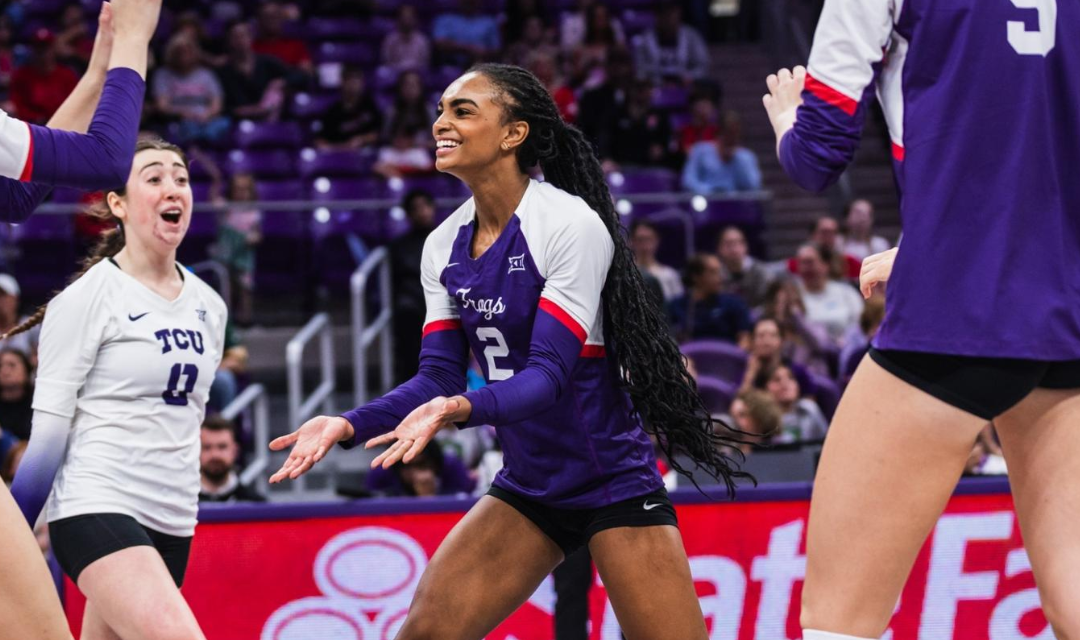
Evan Hendrix stands out to me as one of the most pleasant surprises of the 2025 season. She had some standout matches during her freshman season, but ended the year averaging a fairly unremarkable 1.7 points per set. Fast forward a year, and she’s suddenly one of the leading outside hitters in the nation, averaging nearly five points per set and earning a role as the team’s go-to scorer after fellow outside Jalyn Gibson went down with a season-ending injury in the team’s second match of the year. She ended up totaling 19 double-doubles on the season and reached 20+ kills in 11 matches, including two 30+ kill matches.
At 5’9”, Hendrix may be undersized for an outside hitter, but she doesn’t at all play like it. She has a lethal backrow attack and holds her own at the net, both in terms of hitting and blocking. Add her outstanding defense (of the players on this list, she is first in terms of digs per set) to the equation and you have one of the most well-rounded outsides you could ask for.
6. Ana Burilović, Colorado
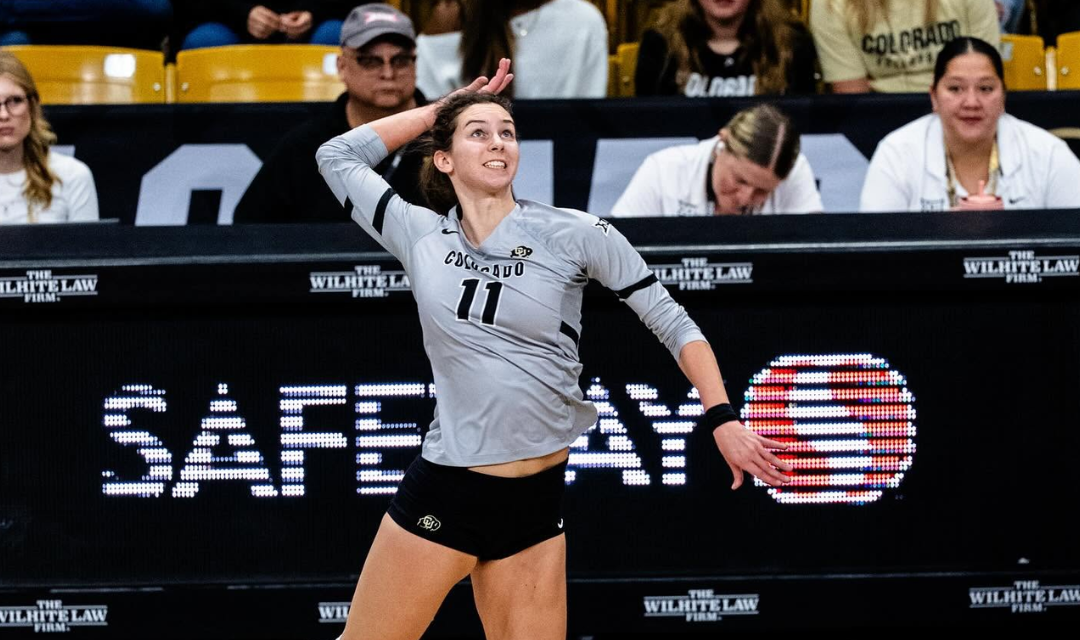
I don’t know what brought Ana Burilović all the way from Croatia to Boulder, Colorado, but the Buffs sure are lucky to have her. Year over year, she’s made huge jumps in her game, with this past season being far and away her best so far. Not only did her offensive load jump by 1.1 kills per set, but she went from hitting .182 in her sophomore year to most recently hitting .242. What’s made her so effective is not only her approach and swing mechanics, both of which are excellent, but also her keen sense of how and when to use the block. Given what a prolific hitter she was last season (9th in the NCAA and 1st in the Big 12 for kills per set), she often had to contend with triple blocks on the opposing side of the net, but rarely did that do much to stop her.
While Burilović’s dig numbers could certainly be a bit higher, her offense more than makes up for any weaknesses in her defensive game. Of the 32 matches she played in last season, she had 20+ points in 20 of them, and 30 points in three. Her most dominant match came in a five-set win over UCF, in which she dropped 41 points.
5. Suli Davis, BYU
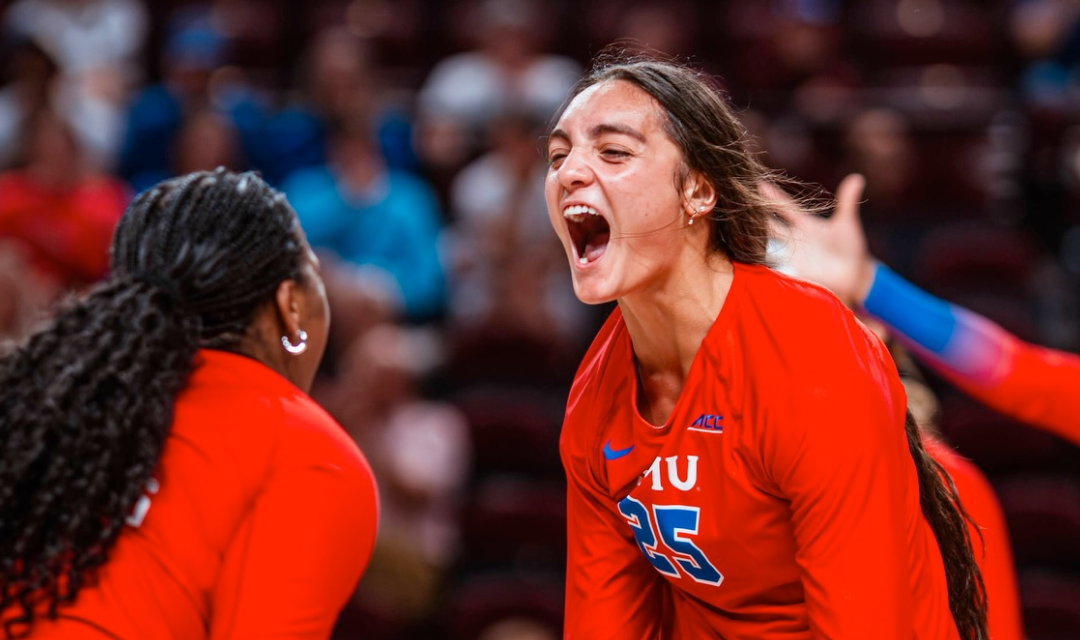
4.97 points per set, .267 hitting percentage, 2.12 digs per set
Average opponent RPI: 79.6
With only one NCAA season under her belt, Suli Davis has already proven herself to be one of college volleyball’s best attackers. It took her just shy of the regular season to set the BYU record for most kills in a season by a freshman, and she recorded double-digit kills in all but one match (an early-season sweep against High Point). In 11 matches, she recorded 20 or more points, achieving a career-best performance of 29.5 points in just four sets against Cincinnati.
For those who followed Davis’ performance at the Under Armour All-America Next match (where she was named MVP) and/or the 2025 Girls U19 World Championship (where she was named Best Outside Hitter), her freshman year success came as no surprise. While her passing could use some improvement, she’s about as well-rounded of a six-rotation player as you could hope for at her age, and her presence at SMU for the next three years stands to make the Mustangs even more of a threat than they already have been in the ACC and on a national level.
4. Brooklyn DeLeye, Kentucky
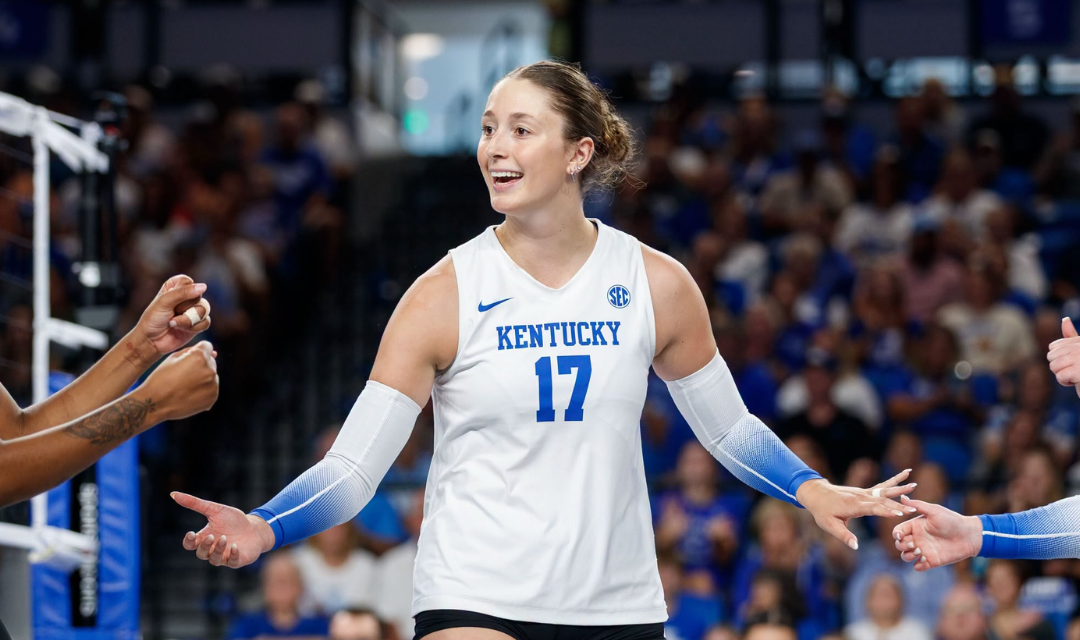
4.97 points per set, .279 hitting percentage, 2.34 digs per set
Average opponent RPI: 63.2
2024 SEC Player of the Year Brooklyn DeLeye is back for her senior year with the Wildcats, and she likely feels she has unfinished business after being swept by Texas A&M in the 2025 championship match. DeLeye has proven she doesn’t need there to be a secondary go-to scorer on her team to be successful, but she and Kentucky as a whole are doubtlessly grateful to have the heavy-hitting Morgan Gaerte to help replace the offensive production lost by Eva Hudson graduating.
Even with Hudson’s scoring contributions, DeLeye still put up just shy of 5 points per set this past season. She also significantly increased her digs per set numbers, going from 1.6 in 2024 to 2.3 in 2025; despite an uncharacteristically inefficient offensive performance, it was her 16 digs in the SEC championship match that helped her team complete the reverse sweep over Texas. And though many opponents tried targeting her in serve receive, her passing rarely wavered.
The most incredible part of what DeLeye was able to do this past season only became public knowledge a day before the championship match. It turns out that she was regularly putting up 20+ kills and double-digit digs all while nursing a tear in her meniscus from early in the season. If DeLeye can put up five points per set and hit north of .250 with a knee injury, imagine what she’ll be able to do now that she’s on the other side of it.
3. Kyndal Stowers, Texas A&M
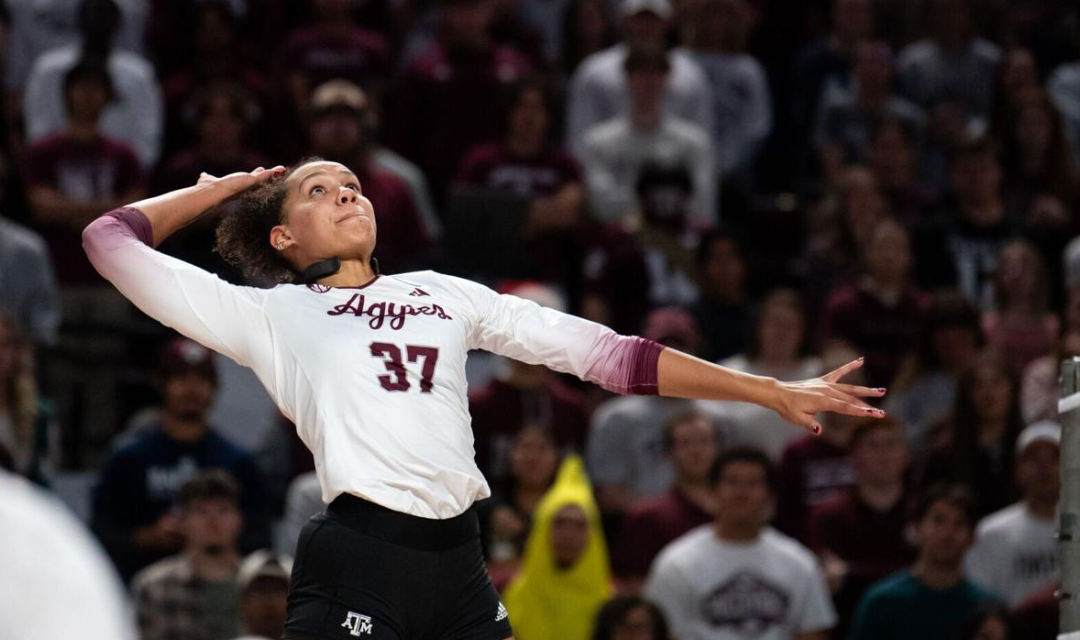
Take a step back in time with me real quick. It’s December 2024, and Texas A&M is up against a fiery Wisconsin squad. On the back of 23 kills from Logan Lednicky and 14.5 points apiece from the middles, the 6-seeded Aggies push the 2-seeded Badgers all the way to five sets, coming up just short in the fifth set with a 13-15 score. Watching at home, I think to myself: “if only Texas A&M could get some reliable scoring from just one of their outsides to complement what Lednicky and the middles are doing, they could be one of the best teams in the country.”
Enter Kyndal Stowers.
How can you not love her story? After being medically retired by Baylor’s athletic staff after a series of concussions, Stowers refused to quit the sport she loved and worked her way back into playing shape. And Texas A&M fans better thank their lucky stars that she did, because she proved to be the missing piece that the Aggies needed to push them from a close loss in the Sweet 16 all the way to winning the program’s first-ever national championship just one year later. Being named the tournament’s Most Outstanding Player was simply the cherry on top.
Stowers’ efficient scoring helped take some of the offensive load off of Lednicky, giving the team a much more dynamic offense. Most nights—21 of 32 matches, to be exact—Stowers was good for at least 10 kills, and she regularly hit .300 or better even against high-level teams. And even when it wasn’t her hammering the ball down for a kill, it was her top-tier ball control that allowed the offense to run through the middle. Now that the rest of the team’s starting lineup has graduated, Stowers’ next challenge is likely to become the team’s go-to scorer night in and night out. Considering her ability to elevate against top teams (when playing top-25 competitors, she improved to 4.3 points and 2.4 digs per set), I think it’s safe to say she’ll be up for the task.
2. Harper Murray, Nebraska
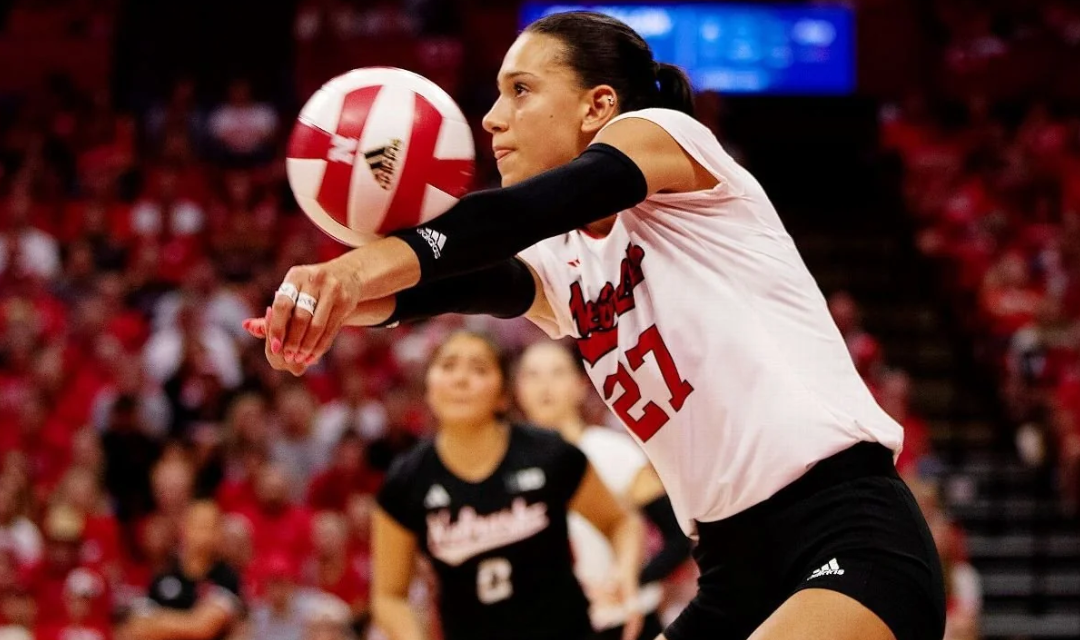
Three seasons into her college career, Harper Murray has emerged as one of NCAA volleyball’s biggest names—and she’s more than earned it. During the past two seasons, she has been the top scorer for a notably balanced offense, averaging over four points per set in both seasons. She achieved a career-high hitting percentage of .295 this past season and has taken up the mantle of being the go-to scorer when the team is in a bind and desperately needs a point (see: the 2025 reverse sweep vs. Kentucky, in which Murray had 23 kills hitting .340).
It isn’t just athleticism that makes Murray so effective; she is an extremely smart attacker who knows when to use the block, when to recycle the ball, and when to swing for the kill. She also has leveled up her all-around game year after year, with her blocking and serving notably getting better and better. And, of course, she exemplifies the never-give-up defense that her team is known for, regularly making impressive saves on balls that would drop if they were hit near any other outside.
Additionally, while competitive fire isn’t exactly quantifiable, I’d say that Murray has it in droves. Against top-25 RPI competitors, she sees the biggest leap in scoring of anyone on this list, to the tune of an additional .41 points per set. Her digs per set also jumps by .27 against the same level of competition, and she does that all while only seeing a small (.018) dip in hitting efficiency. This elevation against top squads is evident in the fact that, against the two teams that would go onto duke it out in the championship match, Murray totaled 55.5 points (over five per set) and hit just shy of .300 while doing so. Even though her team doesn’t always come out on top, it’s stats like these that prove Murray is made for any moment.
1. Torrey Stafford, Texas
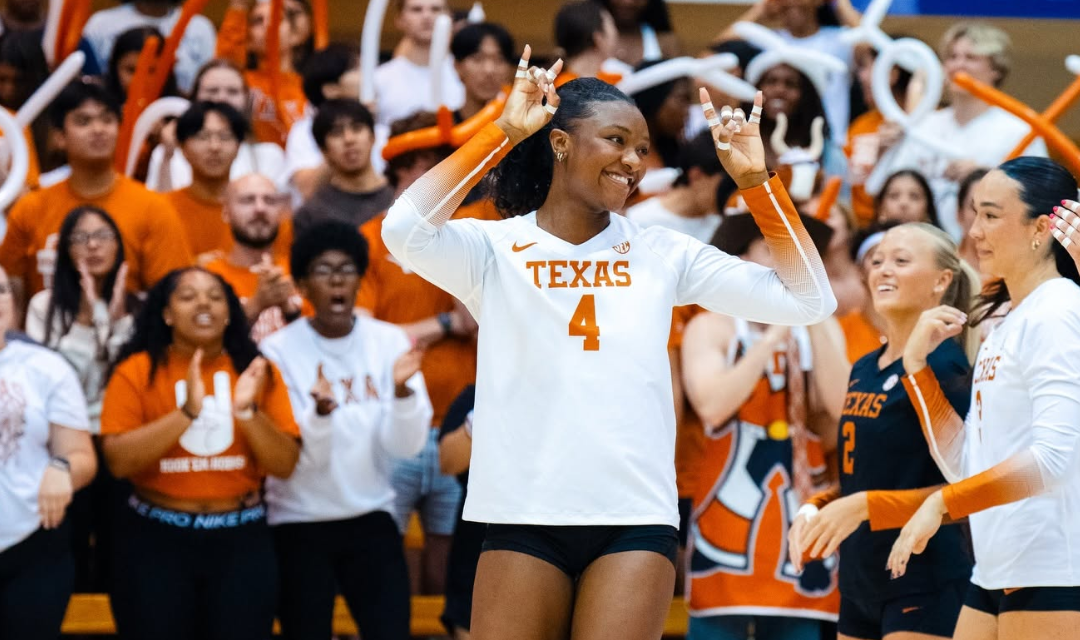
Torrey Stafford shocked the volleyball world when she decided to transfer out of Pittsburgh, where she had twice been to the national semifinals and was a First-Team All-American in her sophomore season. Following her decision to transfer to Texas, I personally expected her kills per set to go up and her hitting efficiency—an outstanding .358 at Pittsburgh—to drop a little, figuring that more swings and less Olivia Babcock to distract the other team’s defense meant that she wouldn’t be quite as efficient. I was wrong.
Not only did Stafford increase her kills per set by 1 (from 3.7 to 4.7), but she did so while also being more efficient. Sure, .360 compared with .358 is a tiny jump, but to see any improvement in hitting percentage while also increasing scoring productivity to that extent is simply unreal. And to further put in perspective how outrageous Stafford’s numbers are, the next highest hitting efficiency from a player on this list is .305. Even more outrageous is that Stafford’s average opponent RPI is the lowest (and therefore the most competitive) on this list, meaning that she maintained that out-of-this-world efficiency all while facing tougher competition than her peers.
Beyond her offense, Stafford is an all-around great player. She brings stable passing and excellent defense to the Longhorns, as well as disciplined blocking and a deceptively tough serve. She knew she’d be walking into Texas with the expectations of being their go-to scorer, and even with having to adjust to a new setter, she did the job and more.